Jardin de l'État, Botanical garden in Saint-Denis, Réunion Island, France
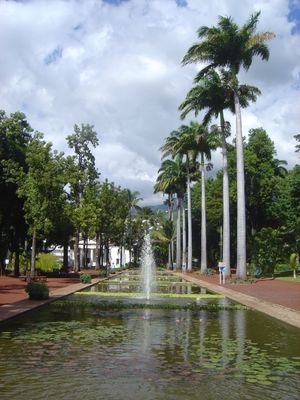
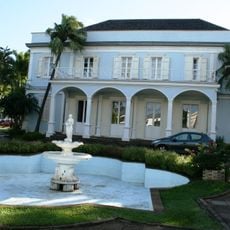
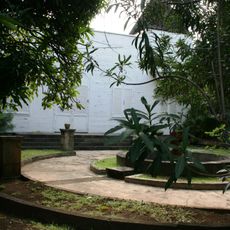
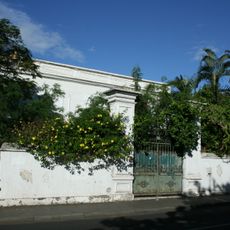
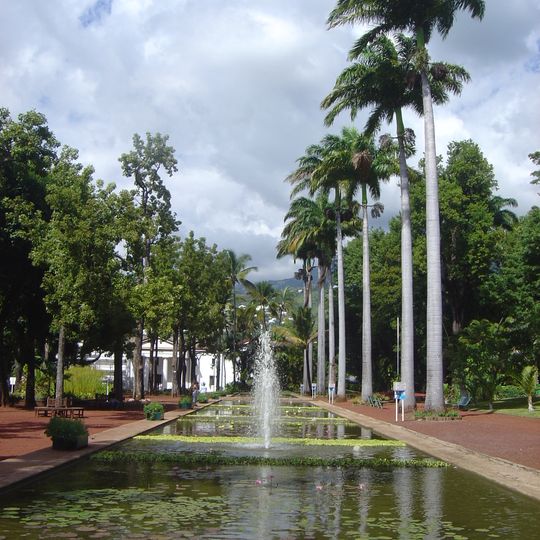
Jardin de l'État is a four-hectare botanical garden in Saint-Denis, created between 1767 and 1773. Its main entrance opens onto Rue de Paris, framed by two small stone arches and a bust of General François Gédéon Bailly de Monthion. Inside, two basins fed by the Ruisseau des Noirs lie to the right of the entrance, each with a small islet of aquatic plants, and a bust of Pierre Poivre and a Wallace fountain stand in the grounds.
The garden was created in the 18th century as a place to study and document tropical plants from the Indian Ocean region. It has since been classified as a historical monument, marking its importance to France's scientific work overseas.
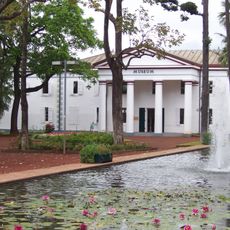
The garden's successive names trace its history: Jardin du Roy in 1816, then Jardin de l'État, Jardin d'acclimatation and Jardin colonial at the end of the 19th century, and also Jardin des plantes or Jardin du Muséum. It is a gathering place for cultural events such as the Fête de la Musique, and children's play areas have been installed for walkers.
The main entrance opens onto a small square off Rue de Paris, marked by two stone arches and a bust of General François Gédéon Bailly de Monthion. Inside, two basins fed by the Ruisseau des Noirs sit to the right of the entrance, each with a small islet of aquatic plants. Play areas are installed for children, and the garden hosts events such as the Fête de la Musique.
The two long stucco basins, one over 60 metres long, were dug in 1865 when the garden became an acclimatisation society, because deforestation inland had weakened the streams that once fed it. They are lined on one side with royal palms alternating with copperleaf shrubs.
The community of curious travelers
AroundUs brings together thousands of curated places, local tips, and hidden gems, enriched daily by 93,099 contributors worldwide.