Musée de Villèle, Historical museum in Saint-Paul, Réunion, France.
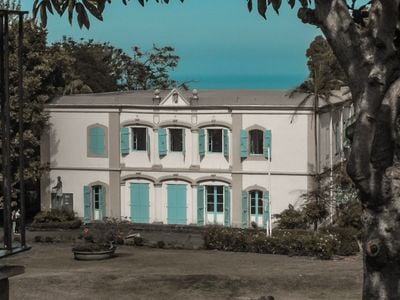
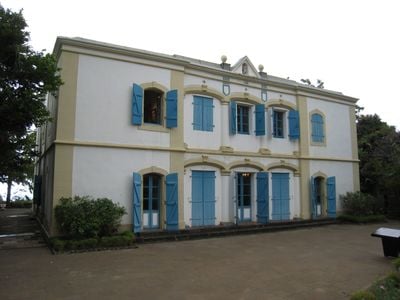
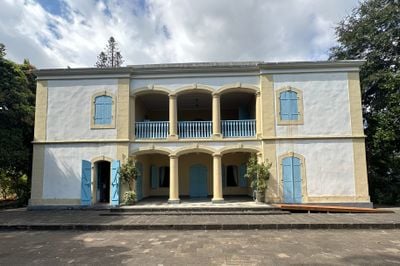
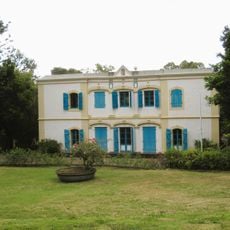
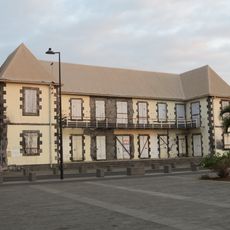
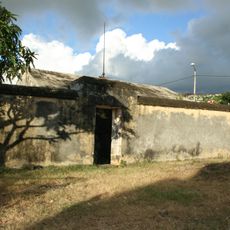
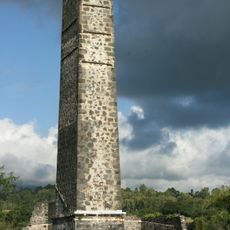
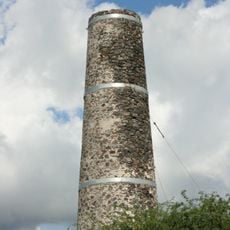
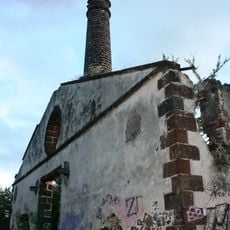
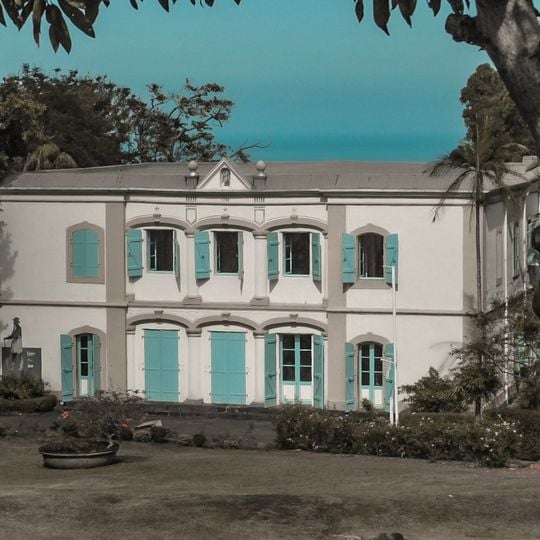
The Musée de Villèle occupies the former Desbassayns plantation in the heights of Saint-Paul. Its main house, built in 1788, is a two-storey basalt-and-brick building with a symmetrical facade, a central pediment and teal-blue louvred shutters. The 10.5-hectare estate also holds a domestic chapel, a slave hospital, a Creole kitchen and the ruins of a sugar factory.
Henri-Paulin Panon Desbassayns and his wife Ombline Gonneau assembled the estate through their 1770 marriage; by 1797 it covered about 750 hectares with 417 slaves. Their son Charles industrialised it, and 462 slaves worked here in 1829. After the 1848 abolition and the sugar crisis, the property passed to the Crédit foncier colonial in 1960; the department bought part in 1973 and opened the museum in 1976.
The ground floor's seven rooms display 80 historic pieces of furniture, including Louis XV and Louis XVI objects, alongside swords of Lieutenant Sicre de Fontbrune and Commander Jean-Baptiste Azéma, François Mussard's rifle and the guitar of the poet Célimène. Six 18th-century ship models built on Mauritius by the Comajora yard are also shown. A room in the former slave hospital serves as a memorial to the estate's Cafre, Malagasy, Indian and Creole slaves.
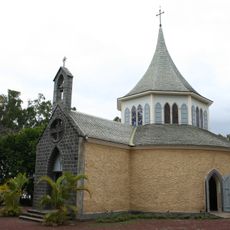
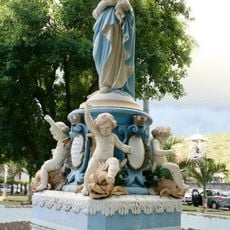
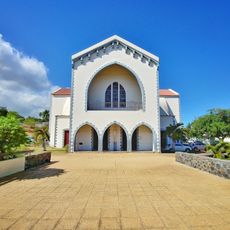
The estate covers 10.5 hectares, with the main house, the Creole kitchen used until the 1970s, the shingle pavilion, the slave hospital, the Chapelle Pointue and the sugar factory ruins. The sculpture of Madame Desbassayns stands north-east of the main house, the factory ruin to the south. Allow time to walk between the outbuildings.
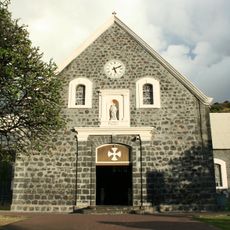
The Chapelle Pointue was built in 1841 specifically to provide religious instruction to enslaved people. This narrow, tower-like building is architecturally unusual for churches and reflects the specific needs of that era.
The community of curious travelers
AroundUs brings together thousands of curated places, local tips, and hidden gems, enriched daily by 94,804 contributors worldwide.