Mau Forest, Montane forest complex in Rift Valley, Kenya.
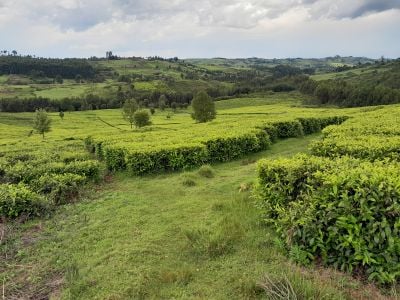
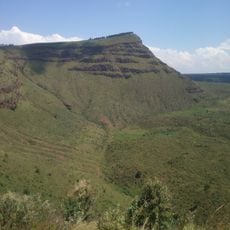
Mau Forest is a 273,300-hectare indigenous montane forest complex on the western slopes of the Mau Escarpment in Kenya's Rift Valley, at elevations between 1,800 and 3,000 metres. Its canopy includes Aningeria adolfi-friederici, Strombosia scheffleri and Polyscias kikuyuensis, and twelve Kenyan rivers rise within it, among them the Mara, Sondu-Miriu, Njoro and Southern Ewaso Ng'iro.
The forest was once significantly larger, but since the 1970s its area has shrunk substantially due to farming and logging operations. This decline accelerated through settlement expansion and increasing resource extraction.
The forest is the ancestral home of the Ogiek (Okiek) people, whose hunter-gatherer way of life long sustained it. Maasai herders bring cattle to graze here in the dry season. In 2005 Naiyan Kiplagat co-founded the Paran Women Group in Ol Lalunga, uniting 64 Okiek and Maasai women's groups with over 3,000 members; it began with beaded necklaces and now runs tree nurseries and makes stoves from charcoal briquettes.
Access to the forest is available through multiple entry points depending on your direction of approach. It is wise to inquire about trail conditions and consider a local guide, as the terrain can be remote and navigation challenging.
The Mau Plateau was one of at least 35 sites considered in the early 20th century as a refuge for persecuted Jews; British Colonial Secretary Joseph Chamberlain offered the area to Theodor Herzl, a proposal known as the British Uganda Programme.
The community of curious travelers
AroundUs brings together thousands of curated places, local tips, and hidden gems, enriched daily by 94,114 contributors worldwide.