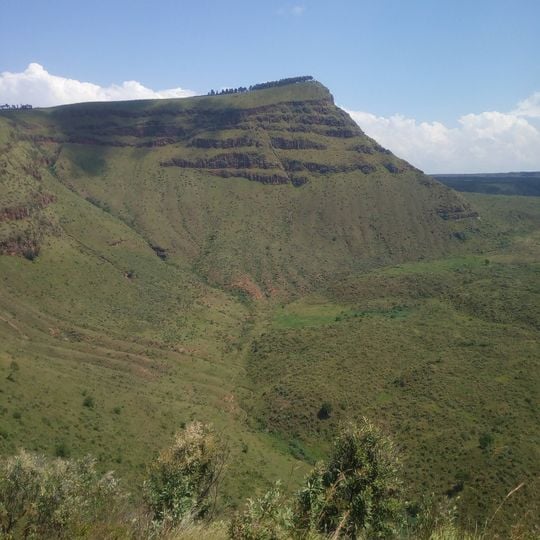
Menengai, Shield volcano in Great Rift Valley, Kenya
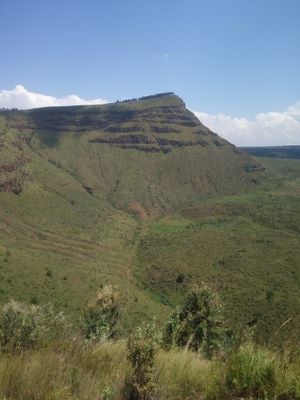
Menengai is a shield volcano whose broad summit holds a 12 by 8 km caldera, the largest volcanic caldera in Kenya and the second largest in Africa. Its upper slopes show stepped bands of dark gray-brown rock beneath the crest, with green vegetation below and a line of small trees along the rim. The caldera walls drop about 500 m to a floor of lava boulders and ridges.
The volcano formed around 200,000 years ago, with the caldera taking shape during major eruptions roughly 8,000 years ago. This long timeline shows how volcanic forces have continuously shaped the landscape of the Great Rift Valley.
The Maasai name Menengai means "place of corpses", linked to a tradition that warriors who fell in battle were carried to the crater. The rim is reached on foot, and from the edge the caldera walls drop about 500 metres to a floor that is now a nature reserve.
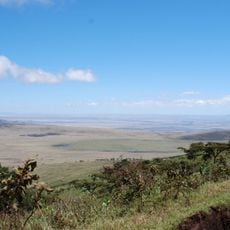
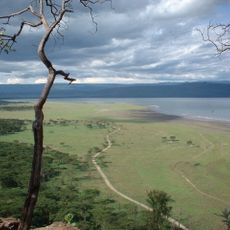
The caldera rim can be reached on foot; the crater walls then drop steeply about 500 metres to the floor, which holds a nature reserve. Menengai lies 10 km north of Nakuru, Kenya's fourth-largest city, so the climb is usually done as a day trip from there. The floor is a thick mass of lava boulders and inaccessible ridges with little sediment, so walking down into it is not a casual descent.
The caldera floor is a thick mass of lava boulders and inaccessible ridges with very little sediment, and the volcano is considered one of the best-preserved Krakatau-style calderas in the world. Geothermal drilling by the Geothermal Development Company is under way on the mountain.
The community of curious travelers
AroundUs brings together thousands of curated places, local tips, and hidden gems, enriched daily by 93,295 contributors worldwide.