Mount Suswa, Shield volcano in Ewuaso Oonkidong'i ward, Kenya
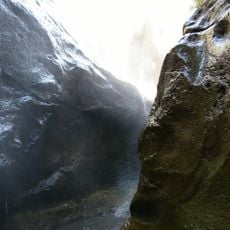
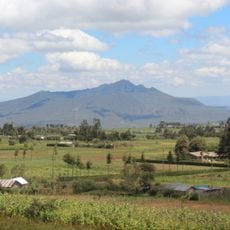
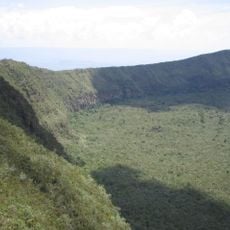
Mount Suswa is a shield volcano in the Great Rift Valley whose summit reaches 2,356 metres. Its caldera, roughly 12 by 8 km, holds the Ol Doinyo Onyoke cone, about 5 km across with a 460-metre-deep crater, and a ring graben that isolates a tilted block of lava like an island terrace. Lava tubes run through the northeast side of the outer crater.
Mount Suswa's volcanic history began with a shield-building phase covering 130 km², followed after a long pause by a pumice eruption that formed a caldera roughly 12 by 8 km. A later phase built the Ol Doinyo Onyoke cone inside the caldera, and its summit crater is 460 m deep. Geologists R. Johnson and R. P. Randall published a detailed study of the mountain's geology in 1991.
The Maasai people have shaped this region for generations, moving their herds seasonally across the grasslands in patterns passed down through time. Their pastoral way of life remains central to how the land is used and perceived today.
Reaching the mountain requires a four-wheel drive vehicle, and hiring a local guide is strongly recommended for navigation. The area is managed through checkpoint access points operated by the Mount Suswa Conservancy.
On the east side of the mountain, baboons shelter in the lava caves from leopards; the BBC documentary The Great Rift: Africa's Wild Heart filmed them entering one chamber, nicknamed the 'baboon parliament'. Many of the caves remain unexplored.
The community of curious travelers
AroundUs brings together thousands of curated places, local tips, and hidden gems, enriched daily by 93,128 contributors worldwide.