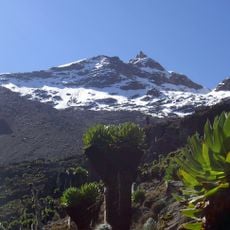
Mount Kenya National Park, National park and World Heritage Site in central Kenya
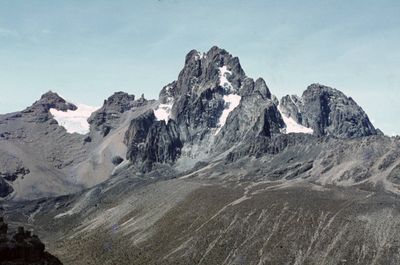
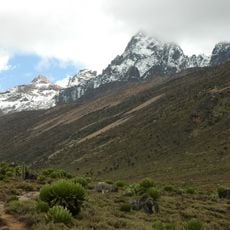
Mount Kenya National Park is a protected area and UNESCO World Heritage Site in central Kenya, covering the second highest peak in Africa and the land around it. The terrain moves through tropical forest, open moorland, and bare rocky ridges as the elevation rises toward the glaciated summits.
Mount Kenya was first protected as a forest reserve before the national park was established in 1949. In April 1978 the area was designated a UNESCO Biosphere Reserve, and in 1997 the national park and forest reserve together became a UNESCO World Heritage Site. Kenya's government gave tourism, scenic beauty, biodiversity and water catchment as its reasons for the park.
The Kikuyu people call the mountain Kirinyaga, a name meaning something close to the mountain of brightness or whiteness. In villages around the base, some traditional homes are still built facing the peak, a practice that shows how present the mountain remains in everyday life.
A permit is required to enter and climb in the park, and taking time to acclimatize before going higher helps avoid altitude sickness. Weather on the mountain can shift quickly, so warm and waterproof gear is worth bringing regardless of the forecast.
Mount Kenya sits almost exactly on the equator, yet its upper slopes carry glaciers that hold ice year-round. Those glaciers have been shrinking for over a century, and comparing old photographs from the early 1900s with what you see today makes that change very visible.
The community of curious travelers
AroundUs brings together thousands of curated places, local tips, and hidden gems, enriched daily by 94,032 contributors worldwide.