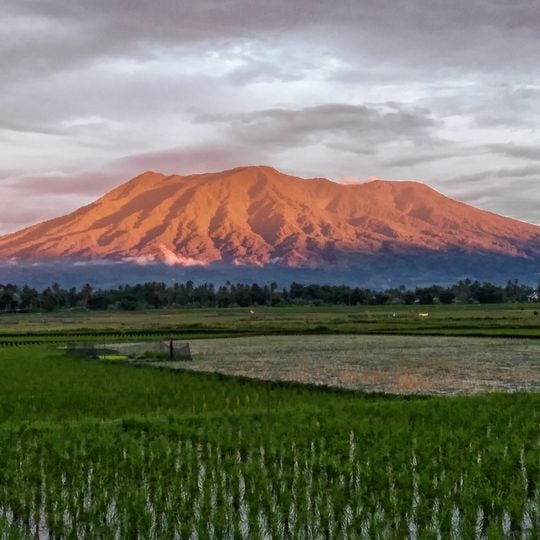
Marapi, Complex volcano in West Sumatra, Indonesia
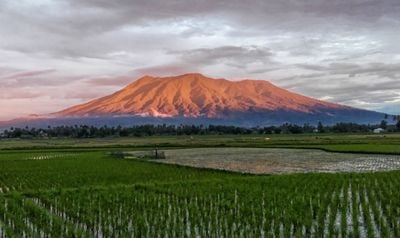
The Marapi rises over a series of forested slopes with multiple summit openings that frequently release gas and ash. Its form shows typical andesite layers with deep erosion gullies and exposed rock faces on the upper sections.
On 8 September 1830 Marapi sent a grey-black cauliflower-shaped cloud 1,500 m above the crater with a rumbling sound. On 30 April 1979 an eruption killed 60 people, and 19 rescue workers were trapped by landslides; rocks and mud damaged at least five residential areas. Ash from late 2011 was carried hundreds of kilometres to Padang Pariaman Regency.
The name Marapi means mountain of fire and reflects how people here have lived with the steady activity of the summit for generations. Local villages watch the smoke from the craters as a daily sign of the living nature that shapes their farming.
All ascents require registration at one of the camps at the base where rangers share current safety information. Groups should start early in the morning and carry protective masks in case of ash fall.
On 3 December 2023 Marapi erupted without any rise in seismic activity beforehand, catching 75 climbers on the slopes; 24 died and 12 were injured. Ash rose about 3,000 metres and a 3 km exclusion zone was declared.
The community of curious travelers
AroundUs brings together thousands of curated places, local tips, and hidden gems, enriched daily by 93,190 contributors worldwide.