Wiebbe Hayes Stone Fort, Ruined stone fort on West Wallabi Island, Western Australia, Australia
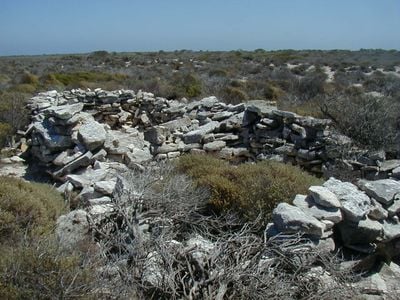
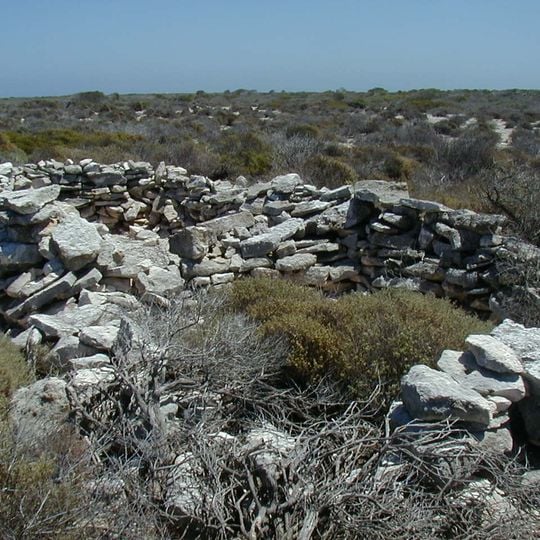
Wiebbe Hayes Stone Fort is a low, ruined wall of stacked, flat limestone slabs on West Wallabi Island, about 100 metres from the sea. The irregular light grey and white stones are laid without mortar in uneven courses, with larger blocks near the base and smaller pieces packed between them. The top edge is jagged where the wall has collapsed, and dry, tangled grey-brown branches and scrub fill the enclosure.
The fort was built in 1629 by survivors of the Batavia, a ship of the Dutch East India Company that wrecked on a reef nearby. Those who built it constructed the fort as a refuge from mutineers within their own crew before rescue eventually arrived.
The fort's name honours Wiebbe Hayes, the soldier whose group built these walls and shelters while marooned. After rescue he was promoted to sergeant by François Pelsaert and later received VOC decorations and a lieutenant's rank. The site is a reminder of the Batavia mutiny, in which most mutineers were executed.
The site lies about 63 kilometers offshore from mainland Western Australia and is reachable only by boat. Visitors interested in early maritime history and archaeology should plan their trip during calmer weather months when island access is more reliable.
The soldiers on West Wallabi Island could wade to East Wallabi Island, where they found a fresh water source. Both islands are also home to the tammar wallaby, giving Hayes' group food and water that the mutineers lacked. The fort's remains sit about 100 metres from the sea.
The community of curious travelers
AroundUs brings together thousands of curated places, local tips, and hidden gems, enriched daily by 93,126 contributors worldwide.