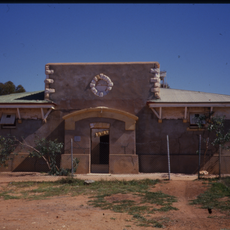
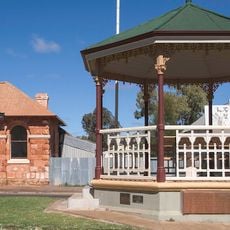
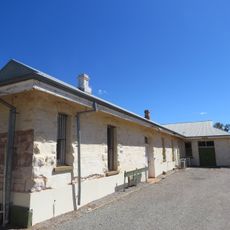
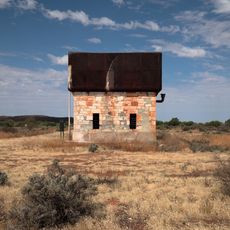
Poison Rocks, Rock formation in Sandstone Shire, Western Australia.
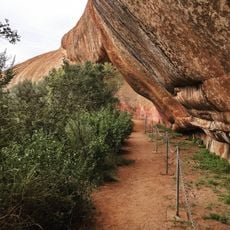
Poison Rocks is a granite formation standing alone in the remote landscape of Western Australia, located roughly 100 kilometers southeast of Mount Magnet. The stones rise distinctly from flat terrain and create a noticeable landmark in the surrounding emptiness.
The site was named in 1854 by explorer Robert Austin after he lost nine horses to toxic plants during his expedition across the region. The incident became a noted event on expedition records and influenced travel routes for explorers who came later.
The rocks hold meaning in Aboriginal traditions as a landmark used for navigation across the land. Visitors walking around the site can sense how the formation served as a reference point in the knowledge systems of indigenous groups.
Reaching this remote site requires a four-wheel drive vehicle, as access roads are unpaved and pass through empty terrain. Plan for extended driving time across open land and bring adequate supplies for your journey.
The plant species in the surrounding area are so toxic that they caused severe consequences for animals, making the place notable in exploration records. A later explorer, John Forrest, deliberately avoided the area and chose a different route for his 1869 search.
The community of curious travelers
AroundUs brings together thousands of curated places, local tips, and hidden gems, enriched daily by 92,500 contributors worldwide.