National Museum of Indonesia, National museum in Gambir, Jakarta, Indonesia.
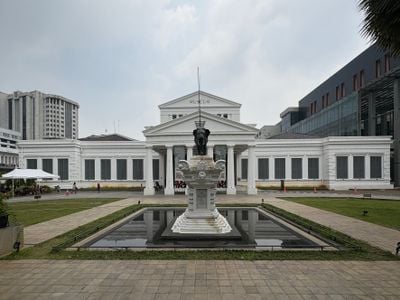
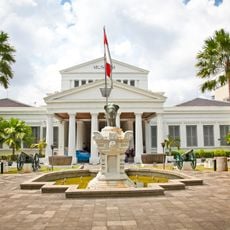
The National Museum of Indonesia occupies two main buildings on Jalan Medan Merdeka Barat: Gedung Gajah, the older southern wing, and Gedung Arca, the northern wing opened in 2007. The white facade carries a four-column portico with a triangular pediment inscribed "MUSEUM". A bronze elephant statue on a tiered pedestal stands in a reflecting pool before the entrance. The collection numbers about 141,000 objects.
Dutch scholars founded the institution in 1778 as part of a scientific society during the colonial period. The current main building was erected in 1868 and transferred to state administration after independence.
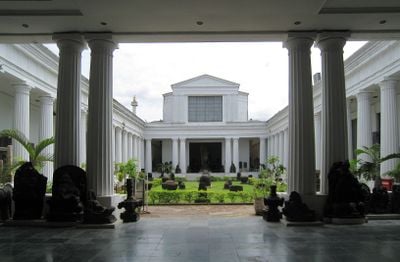
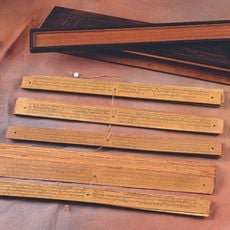
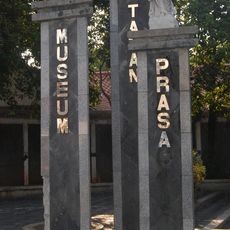
The bronze elephant in the forecourt, given by King Chulalongkorn of Siam in 1871, gave the museum its popular name, Gedung Gajah. The building is also called Gedung Arca, the House of Statues, for the stone statues from Java and Sumatra displayed inside. The museum holds the Nagarakretagama lontar manuscript and the Prajnaparamita of Java, returned by the Netherlands in 1977.
The museum stands on the west side of Merdeka Square at Jalan Medan Merdeka Barat 12, with the old Gedung Gajah wing to the south and the newer Gedung Arca wing to the north. The bronze elephant on its tiered pedestal and the reflecting pool mark the forecourt. After the September 2023 fire the old building closed for renovation until October 2024, so check which wing is open before setting out.
A bronze elephant statue stands in the forecourt and shapes the local image of the institution so much that residents call the building Gedung Gajah. The elephant was a gift from Thailand and became the unofficial symbol.
The community of curious travelers
AroundUs brings together thousands of curated places, local tips, and hidden gems, enriched daily by 92,807 contributors worldwide.