Kraton of Surakarta, Royal palace in Surakarta City, Indonesia
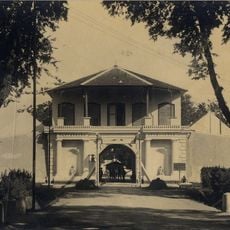
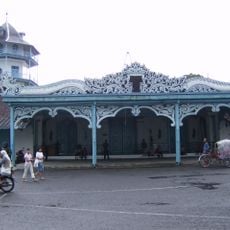
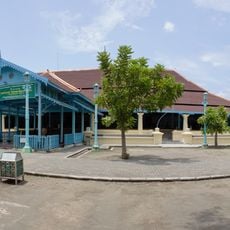
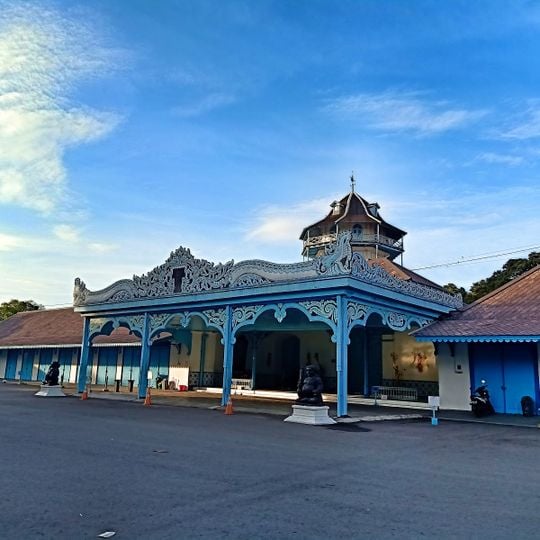
The Kraton of Surakarta is a palace complex in Surakarta, Central Java, with a core area of 15 hectares inside a rectangular walled enclosure about 500 by 700 metres. Its buildings mix Javanese and European styles, mostly in white and blue. A low open pavilion with a blue-and-white facade stands before a long building with three tall blue doors and a square-based tower with a tiered roof.
Susuhunan Pakubuwana II founded this palace in 1743 after leaving his earlier residence in Kartasura because of the destruction from the Chinese War. Later rulers added new buildings and courtyards while keeping the original center structure intact.
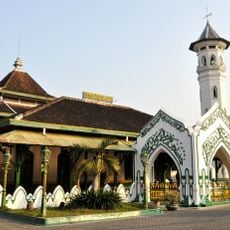
The name Surakarta combines the Javanese words sura (courage) and karta (prosperous), and reverses the name of the abandoned capital Kartasura. Each year the palace hosts Sekaten, a week-long celebration of Muhammad's birth, when two heirloom gamelan sets, Kyai Guntursari and Kyai Gunturmadu, are played in the Great Mosque courtyard. The Garebeg Mulud procession then carries mountain-shaped offerings to the mosque.
Access is through the main gate on the north side of the complex, and visitors should wear comfortable shoes because the paths between courtyards can be long. Guided tours help with orientation in the large site and explain the function of the different areas.
The octagonal tower Panggung Songgobuwono, about 30 metres high, was built in 1782 under Pakubuwana III. Its top chamber, called Tudung Saji, served as the king's meditation place and was used to watch the surrounding Dutch colonial offices. A figure riding a naga on the summit encodes the Javanese year 1708, or 1782 CE.
The community of curious travelers
AroundUs brings together thousands of curated places, local tips, and hidden gems, enriched daily by 94,760 contributors worldwide.