Great Mosque of Surakarta, Royal mosque in Surakarta, Central Java, Indonesia
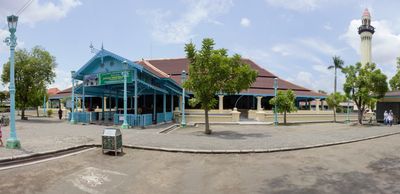
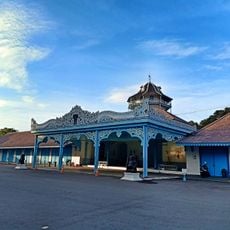
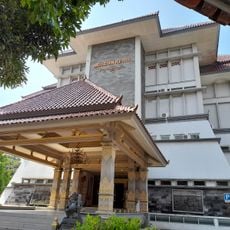
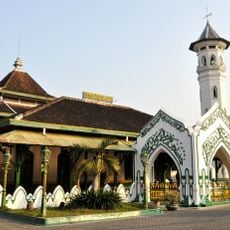
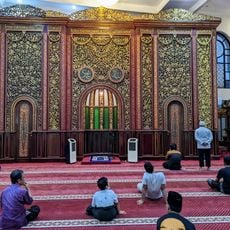
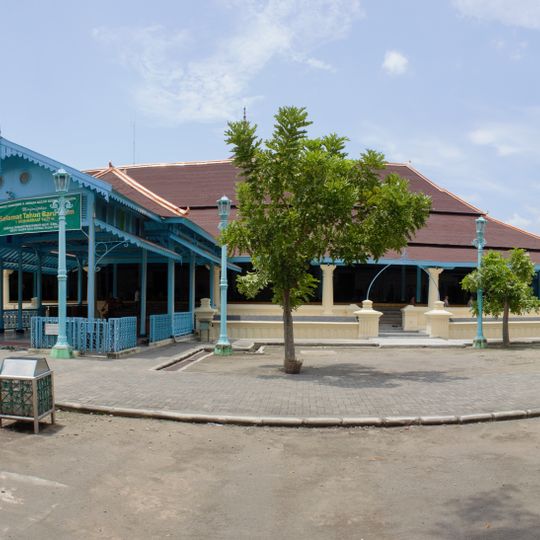
The Great Mosque of Surakarta is a royal mosque with a three-tiered tajug roof topped by a mustaka ornament. Its main prayer hall, supported by four soko guru posts, opens through seven doors onto a front serambi porch. A maksura with a small hip roof stands left of the mihrab for the ruler's prayer, and a pawestren serves women. The complex is enclosed by a 3.25-metre wall.
Sunan Pakubuwono III began the mosque in 1763 and completed it in 1768, as recorded on an inscription on the main hall's outer wall. It served as the Surakarta Sunanate's royal mosque and as a jami mosque for Friday and Eid prayers. The perimeter wall was added in 1858 under Sunan Pakubuwono VIII, and the minaret in 1928 under Sunan Pakubuwono XI.
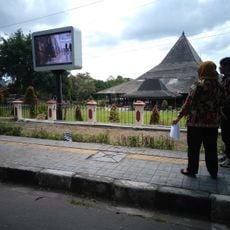
The mosque's name in Javanese is Masjid Ageng Karaton Surakarta Hadiningrat. During Sekaten, the festival marking the Prophet Muhammad's birth, gamelan sets from the kraton are placed and played in the pagongan pavilions on the north and south sides of the courtyard. The mosque also hosts Grebeg and Maulid ceremonies, and its staff hold court titles such as Kanjeng Raden Tumenggung Penghulu Tafsiranom.
The complex is well-organized with clear areas for prayer, ablution, and ceremonies that are accessible to visitors. Be mindful of opening hours and respect the requirements of Islamic etiquette when entering the sacred spaces.
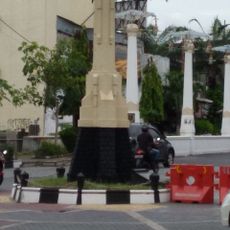
The minaret northeast of the prayer hall was built in 1928, during the reign of Sunan Pakubuwono XI, and its design follows the Qutb Minar of Delhi. The sources differ on the ruler: the Indonesian article credits Pakubuwono X, the English one Pakubuwono XI.
The community of curious travelers
AroundUs brings together thousands of curated places, local tips, and hidden gems, enriched daily by 94,368 contributors worldwide.