Candi Brahu, Buddhist temple in Trowulan, Indonesia
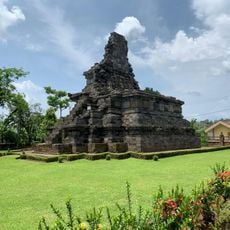
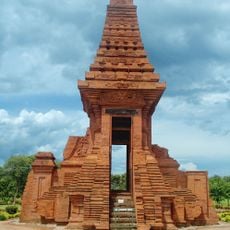
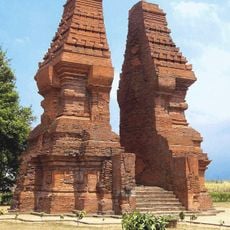
Candi Brahu is a red brick temple facing west, about 22.5 m long, 18 m wide and 20 m high. Its broad tiered base of the same brick rises in setbacks to a body that narrows upward with vertical corner projections, widens near the top and ends in a squared, stepped crown. A dark rectangular opening sits in the upper front face, and a small tree grows before the base.
Candi Brahu is linked to the Alasantan inscription, which names a sacred building called wanaru or warahu and was found nearby. The Javanese account attributes its founding to King Mpu Sindok in 939 CE, while other estimates place it in the 14th century. Restoration between 1990 and 1995 found no ashes in the chamber, as the ash receptacles had been looted.
The name Brahu likely comes from wanaru or warahu, a sacred building named in the Alasantan inscription found near the temple. The Javanese Wikipedia notes that charcoal remains around the temple were radiocarbon-dated to between 1410 and 1646.
Visitors should allow time to explore the different areas of the site carefully. Wearing comfortable shoes is recommended, as the paths and grounds around the temple can be uneven in places.
Charcoal found around the temple was radiocarbon-dated by the National Atomic Energy Agency (BATAN) in Yogyakarta to between 1410 and 1646. The Alasantan Inscription, discovered nearby, links the name 'brahu' to the old word wanaru or warahu, a term for a sacred building.
The community of curious travelers
AroundUs brings together thousands of curated places, local tips, and hidden gems, enriched daily by 93,176 contributors worldwide.