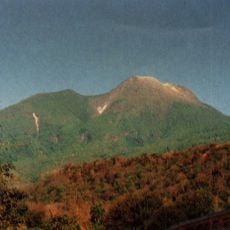
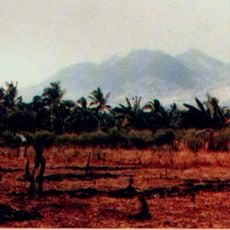
Iliwerung, Dormant volcano in Lembata Island, Indonesia.
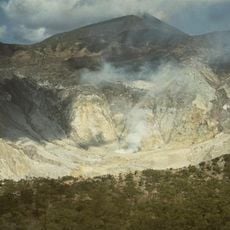
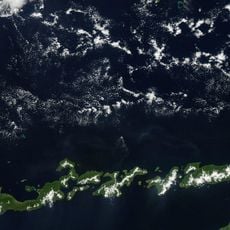
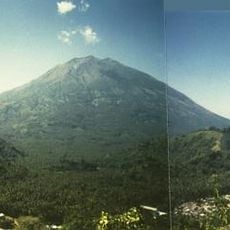
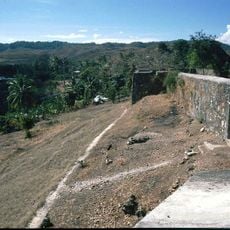
Iliwerung is a complex volcano forming a south-facing peninsula on the southern rim of the Lerek caldera on Lembata Island. Its craters and lava domes run along north-south and northwest-southeast lines, and the summit dome, built by a VEI-3 eruption in 1870, rises to 586 metres. The older Ile Adowajo peak to the north, now about 300 metres high, is known as Gunung Mauraja.
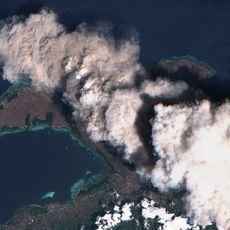
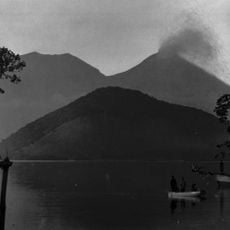
Iliwerung's summit dome formed in a VEI-3 eruption in 1870, when the volcano appeared as a new dome on the flank of the older Ile Adowajo. Recorded eruptions followed in 1910, 1928, 1948–1952, 1973–1974, 1976, 1983, 1993, 1999, 2013 and 2021. A landslide from the mountain in 1979 produced tsunamis up to 9 m high that killed more than 500 people.
The name Iliwerung is tied to Ile Adowajo, the older dome whose collapse left the Mauraja peak to the north; the 1870 eruption built the present dome. Since 1973 activity has concentrated at Hobal, a submarine vent on the lower east-southeastern flank, so eruptions are watched at sea rather than at the summit.
Iliwerung sits on the southern rim of the Lerek caldera, and since 1973 eruptions have been confined to the submarine Hobal vent on the lower east-southeastern flank. The 1979 flank collapse sent 9 m tsunamis ashore and killed more than 500 people, and a submarine eruption caused a tsunami with a few deaths in 1983. Check current volcanic activity before travelling to the south coast of Lembata.
Hobal is not a separate mountain but a submarine parasitic vent on Iliwerung's lower east-southeastern flank. Since 1973 every recorded eruption has come from this vent rather than the summit dome, which last built up in 1870.
The community of curious travelers
AroundUs brings together thousands of curated places, local tips, and hidden gems, enriched daily by 93,892 contributors worldwide.