Adelaide International Bird Sanctuary National Park - Winaityinaityi Pangkara National Park, Coastal national park in South Australia.
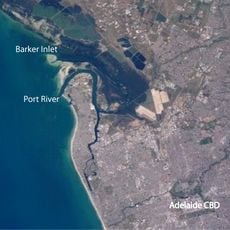
Adelaide International Bird Sanctuary National Park—Winaityinaityi Pangkara runs 60 km along Gulf St Vincent, from Barker Inlet in the south to Parham in the north. Its very low-gradient coastline holds subtidal seagrass meadows, intertidal mangroves and supratidal saltmarshes and salt pans, a stretch also called the Samphire Coast. The park overlaps Torrens Island and Port Gawler conservation parks and the Adelaide Dolphin Sanctuary.
The South Australian government committed to the sanctuary at the March 2014 state election, and the 2014–15 budget set aside A$300,000 to start work. In August 2014 it bought 2,300 hectares of undeveloped former salt-operator land for A$2 million and pledged A$1.7 million over four years. Land at Windsor, Dublin and Lower Light was proclaimed a national park in 2016, after the area had been declared a conservation park in 2014.
The name Winaityinaityi Pangkara comes from the Kaurna language and means "country belonging to all birds"; it is pronounced "Wee-nay-chi-nay-chi pan-ker-a". Indigenous involvement is written into the park's goals, with Aboriginal people employed and Kaurna knowledge used in environmental and cultural interpretation programmes.
Visitors can reach the site through several access points such as St Kilda foreshore or Thompson Beach. Parking areas and observation spots are available at the main entrances and provide good viewing opportunities.
Around 27,000 migratory shorebirds feed and fatten on the sanctuary's mudflats and samphire over the austral summer, then fly back to the northern hemisphere to breed. The site is one of the southern destinations of the East Asian-Australasian Flyway. Species recorded here include curlew sandpiper, eastern curlew, red knot, ruddy turnstone and eastern great egret.
The community of curious travelers
AroundUs brings together thousands of curated places, local tips, and hidden gems, enriched daily by 93,958 contributors worldwide.