National Railway Museum, Railroad transport museum in Port Adelaide, Australia.
The National Railway Museum is a railway museum in Port Adelaide, South Australia, displaying locomotives, carriages, and railway equipment from government, state, and private operators. The collection spans three different rail gauges and covers a large outdoor site with covered exhibition areas.
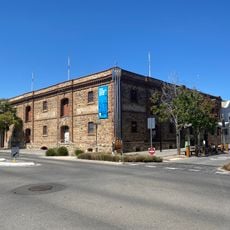
The museum began in 1963, when preservationists alarmed by the scrapping of South Australian Railways steam locomotives asked Commissioner John Fargher for land near the former Mile End locomotive depot. The first locomotive arrived in 1964 and the Mile End Railway Museum opened in 1970, run by volunteers two afternoons a month. A $2 million Australian Bicentenary grant let the museum redevelop the former Port Dock station goods terminal off Lipson Street; it closed at Mile End in January 1988 and reopened there as the Port Dock Station Railway Museum, renamed the National Railway Museum in 2001.
The Tea and Sugar train exhibition shows how a moving supply line brought food and everyday goods to people living in the most remote parts of Australia. Walking through it gives a clear sense of how deeply daily life in the outback depended on that train.
The museum sits off Lipson Street, about half a kilometre north of Port Adelaide railway station, which is served by local trains from central Adelaide. Exhibits fill two large pavilions and the Port Dock goods shed, so allow time to walk between them. Steam locomotives Bill and Bub haul rides on a 457 mm track around the site.
The museum runs steam locomotives Bill (2-4-0) and Bub (0-4-2T) on a 457 mm track around the site, giving rides to visitors. Its operational fleet also includes broad-gauge diesels 515, 703 and 801, the "Red Hen" railcars 321 and 400, and "Bluebird" railcar 257.
The community of curious travelers
AroundUs brings together thousands of curated places, local tips, and hidden gems, enriched daily by 93,650 contributors worldwide.