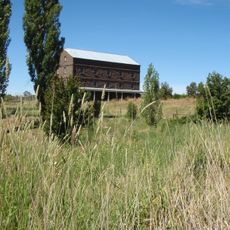
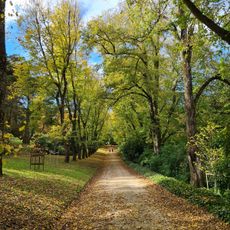
Hanging Rock, Nature reserve near Mount Macedon, Australia
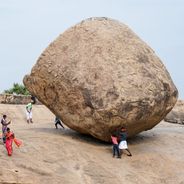
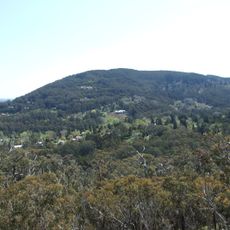
Hanging Rock is a mamelon of soda trachyte that rose 6.25 million years ago when stiff magma congealed in a vent, reaching 718 m above sea level and 105 m above the plain between Newham and Hesket. Cooling split the rock into rough columns that weathered into pinnacles; the formation includes the suspended boulder called Hanging Rock above the main entrance path, the Colonnade, the Eagle and the UFO.
Hanging Rock is a mamelon formed about 6.25 million years ago, when stiff magma oozed from a vent and congealed in place; it is not a volcanic plug. The Dja Dja Wurrung, Woi Wurrung and Taungurung were forced from the site in the mid-19th century. Surveyor Robert Hoddle named it Diogenes Mount in 1843, and Joan Lindsay's 1967 novel Picnic at Hanging Rock, filmed by Peter Weir in 1975, made it widely known.
The name Hanging Rock refers to a boulder suspended between other boulders, under which the main entrance path passes. The site is also known as Ngannelong to some Aboriginal Australians, and as Dryden's Mount or Dryden's Rock. Since 1967 it has been associated with Joan Lindsay's novel Picnic at Hanging Rock, and a costumed picnic is held around Valentine's Day.
Several walking trails lead through the formation, with some sections crossing uneven rocks and steep staircases. Signs along the routes explain geological features and the connection of the site to its original inhabitants.
The solidified magma formed columns and fractures that give the landscape a geometric structure uncommon in volcanoes of this type. In some places the rocks appear loosely stacked on top of each other, although they are firmly fused to the bedrock.
The community of curious travelers
AroundUs brings together thousands of curated places, local tips, and hidden gems, enriched daily by 92,666 contributors worldwide.