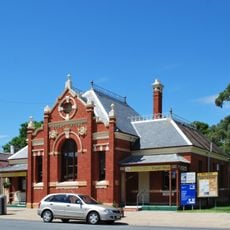
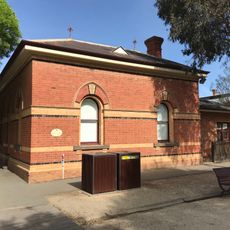
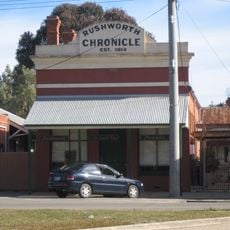
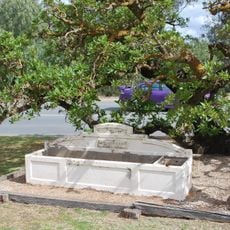
Moama Historic Precinct, Heritage precinct in Moama, New South Wales, Australia
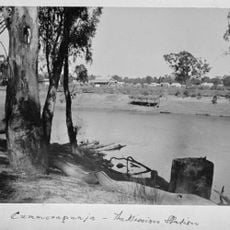
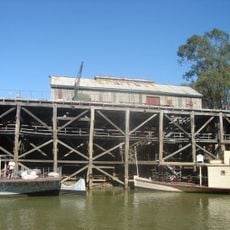
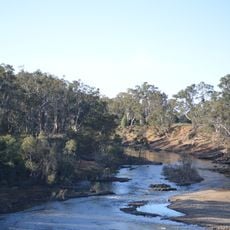
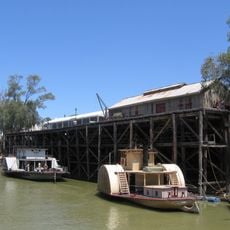
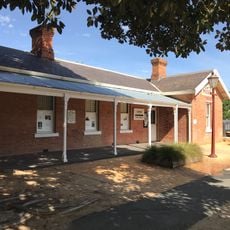
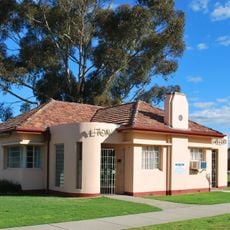
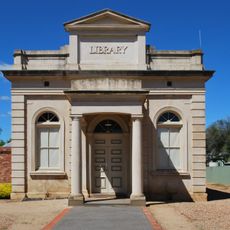
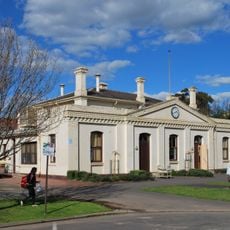
Moama Historic Precinct is a heritage-listed abandoned settlement site on Hunt Street in Moama, New South Wales, extending to the Echuca–Moama Bridge and Echuca Wharf on the Victorian bank of the Murray River. The precinct preserves the former river crossing and wharf area, with the iron rail and road bridge built between 1875 and 1878 still carrying traffic across the river.
John Maiden established the settlement in the 1840s, creating a ferry crossing over the Murray River and building the Junction Inn to serve travelers. These early developments made it a crossing point between two towns that would grow on either side of the river.
The name Moama replaced "Maiden's Punt" officially in 1851, after James Maiden, who ran the punt, the Junction Inn, the mail service and cattle dealing. The area's Aboriginal inhabitants before European occupation were the Jodajoda; the Yorta Yorta, also called Bangarang, were a language group whose country ran from Echuca to Cobram and south to Shepparton, and their descendants call themselves the Yorta Yorta Nation.
The precinct runs along Hunt Street on the New South Wales bank, with the Echuca–Moama Bridge and the Victorian-side Echuca Wharf forming the river crossing. The Junction Inn remains stand in Chanter Street, a short walk from the Hunt Street site. The bridge was finished in 1878 but only opened in 1879, when residents opened it themselves in the Bridge Riot.
The 1879 "Bridge Riot" gave the precinct one of its oddest episodes: the iron road and rail bridge over the Murray was finished in 1878 but stayed shut, so residents opened it themselves. Construction workers had lived nearby in a settlement called Shinbone Alley, in the Banyule Forest east of the bridge.
The community of curious travelers
AroundUs brings together thousands of curated places, local tips, and hidden gems, enriched daily by 94,072 contributors worldwide.