Pipe Shed, Historic pipe storage building in Methven, New Zealand
The Pipe Shed is a section of reinforced concrete pipe cast in 1940 for the Rangitata Diversion Race, now used as a shed in Methven. The pipe, about 3.7 m in internal diameter and 3.0 m long, rests on a pre-cast control gate, with wooden wedges preventing it from rolling. Concrete ends enclose the openings, one fitted with a wooden door and a vent above; the interior has a wooden floor.
The Rangitata Diversion Race began in 1937 under engineer Thomas Beck, then New Zealand's largest public works scheme, and a 1938 slip near the Surrey Hills forced a piped re-route. About 800 pipes were cast in 1940 at The Birches; one was set on a pre-cast control gate at the Methven work camp to store explosives. It is the camp's only remnant, listed Category I on 14 April 2005 and restored in 2025.
The Pipe Shed is the only remnant of the Public Works Department's Methven work camp, where the Rangitata Diversion Race pipes were made and stored. Its name comes from its use: a 1940 pipe section, sealed with concrete ends and a wooden door, that stored explosives and sometimes concrete. It is now a memorial to the RDR, the largest public works scheme of its time.
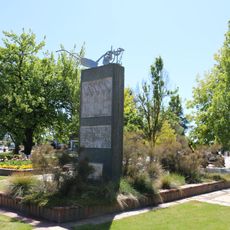
The Pipe Shed is hidden from public view, screened by bushes and trees on land surrounded by Main Street (State Highway 77), South Belt and Wayne Place. Reach it through a gap in the vegetation from Main Street, or via the Garden of Harmony reserve on South Belt. The surrounding land is used for grazing.
The Pipe Shed is the only pipe section from the Rangitata Diversion Race that remains visible; all others are submerged. It is also the sole remnant of the Public Works Department's Methven work camp, where the pipe was set on a pre-cast control gate and held with wooden wedges.
The community of curious travelers
AroundUs brings together thousands of curated places, local tips, and hidden gems, enriched daily by 94,532 contributors worldwide.