Ōpārara Arch, Natural limestone arch in Kahurangi National Park, New Zealand.
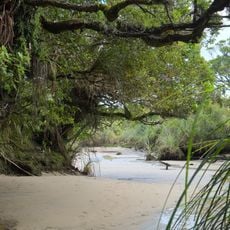
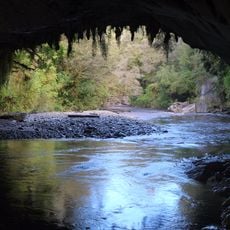
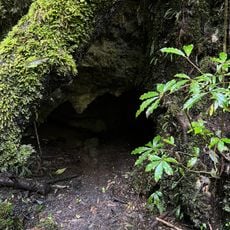
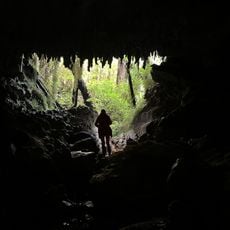
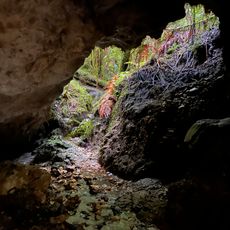
Ōpārara Arch is a natural limestone passage in Kahurangi National Park carved by a river flowing beneath towering rock walls on both sides. The formation creates a tunnel-like opening where water continues to flow, surrounded by native forest that gives the area a secluded feeling.
The Ōpārara Basin lies in Kahurangi National Park, where the Honeycomb Hill Caves hold subfossil moa bones; access to the Honeycomb Hill Arch is by permit only. The arches themselves are named after J. R. R. Tolkien's Moria, as are the nearby Mirror Tarn and other features. The Department of Conservation publishes measurements for Ōpārara Arch of 219 m long, up to 79 m wide and 43 m high.
The names of the arches and the nearby Moria Gate Mirror Tarn come from The Lord of the Rings, as do other place names in the area. Between the side track into the Moria Gate river cave and its viewpoint, a short paved section shows irregular pavers marked with moa footprints. The Ōpārara Arch track ends at a wooden viewpoint partway up inside the arch.
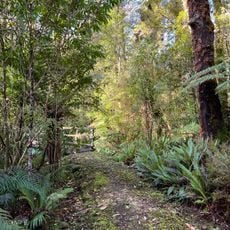
A half-hour walking trail through the forest leads to the arch with wooden steps that help access an elevated viewing area within the formation. The ground can be slippery due to moisture, so wear sturdy footwear and take your time navigating the built structures for safety.
Downstream of the main tunnel stands a separate rock arch 10 m long, with a gap of about 10 m before the main passage begins. Near the elevated viewpoint inside Ōpārara Arch, stalactites and stalagmites are only just beginning to form, so the arch is a limestone cave in its early stages.
The community of curious travelers
AroundUs brings together thousands of curated places, local tips, and hidden gems, enriched daily by 94,663 contributors worldwide.