Āwhitu Regional Park, Regional park on Āwhitu Peninsula, New Zealand.
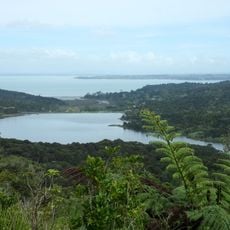
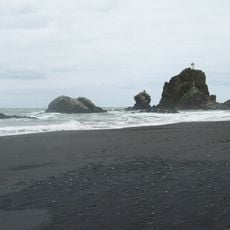
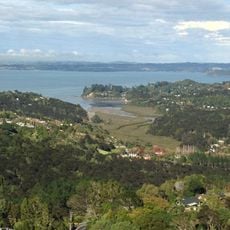
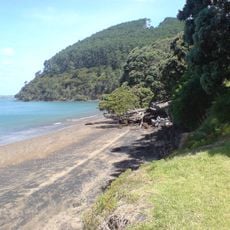
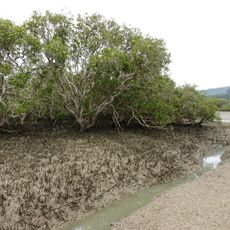
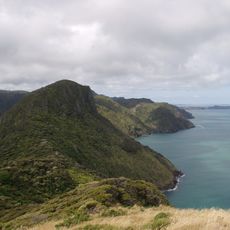
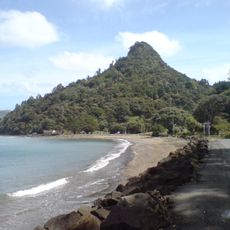
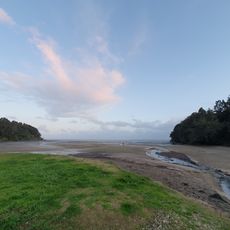
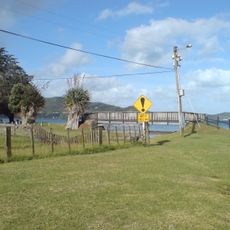
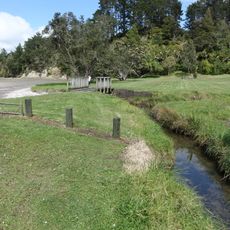
Āwhitu Regional Park lies on the Āwhitu Peninsula south of Manukau Heads, about 33 km north of Waiuku on the western side of the Manukau Harbour. Its mix of grassland, exotic conifer trees and wetlands was mostly wetland and coastal pōhutukawa forest before being turned into farmland. Offshore sits Kauritutahi Island, and the park has several white sand beaches.
Tāmaki Māori groups including Ngāti Te Ata Waiohua, Ngāti Tamaoho and Te Ākitai Waiohua settled the peninsula seasonally, moving to where resources were available. English immigrants John and Sarah Brook settled here in 1875 and built a homestead in 1878, running a sheep and cattle farm. The farm was sold in 1971 to become a regional park, opened to the public in 1975; a lake was created in 1985.
Tāmaki Māori groups, including Ngāti Te Ata Waiohua, Ngāti Tamaoho and Te Ākitai Waiohua, used the peninsula seasonally, moving between settlements according to available resources. The park's wetlands now shelter the largest fernbird (kōtātā) population in the Manukau Harbour, and the birds' Māori names appear alongside their English ones on park signage.
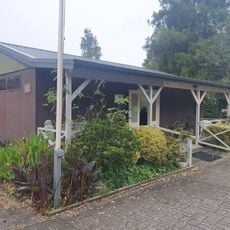
The park is about 33 km north of Waiuku on the Āwhitu Peninsula, with white sand beaches and Kauritutahi Island offshore. Āwhitu Environmental Camp is often used by school groups, and the nine-hole Āwhitu Golf Club is on site. The park is used for nature walks, horse riding, kayaking and boat launching.
The park holds the largest population of fernbirds (kōtātā) in the Manukau Harbour, and its wetlands shelter banded rail, spotless crake and Australasian bittern. Offshore lies Kauritutahi Island, and a lake dug in 1985 now grows the native sedge Eleocharis sphacelata.
The community of curious travelers
AroundUs brings together thousands of curated places, local tips, and hidden gems, enriched daily by 93,491 contributors worldwide.