Puketāpapa, Volcanic cone in Auckland, New Zealand.
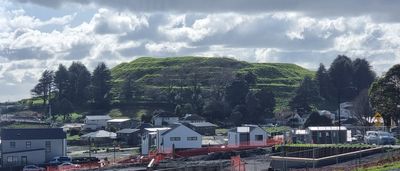
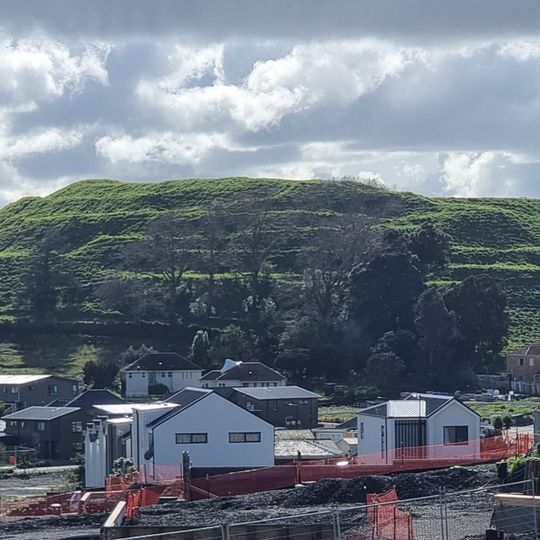
Puketāpapa is a 110-metre scoria cone in Mount Roskill, Auckland, built by fire-fountaining from two craters about 20,000 years ago. Its peak stands in Winstone Park, and the main southern crater was excavated in 1961 and filled with a water-supply reservoir. Lava from the cone's base flowed north and northwest.
Puketāpapa formed about 20,000 years ago when fire-fountaining from two craters built the scoria cone, and lava flowed north and northwest from its base. It was later the site of a Māori pā. In 1961 the main southern crater was excavated and filled with a water-supply reservoir, destroying many historic cooking pits and terracing sites.
Puketāpapa and Pukewīwī are both Māori names for the hill, meaning flat-topped hill and hill covered in rushes. Neither name is official, but in 2014 the Tāmaki Collective agreed that both reflect the historical association of local Māori with the site. The mountain is one of 14 Tūpuna Maunga vested in the collective by the 2014 Treaty of Waitangi settlement.
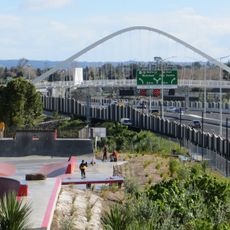
The summit area is permanently closed to private motor vehicles, so the last stretch is on foot. State Highway 20 runs close to the mountain, and the Waikaraka Cycleway path beside it, finished after six months of work, opened with the park facilities on 25 July 2010.
The upper summit area was converted to grassland in 2018 and remains closed to motor vehicles to protect archaeological features. This protection preserves important cultural sites while still allowing visitors to explore the location.
The community of curious travelers
AroundUs brings together thousands of curated places, local tips, and hidden gems, enriched daily by 93,955 contributors worldwide.