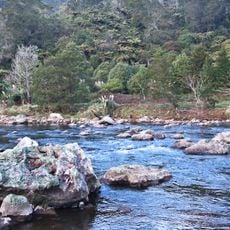
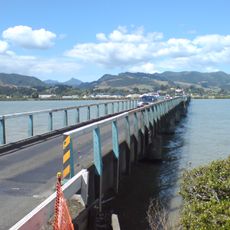
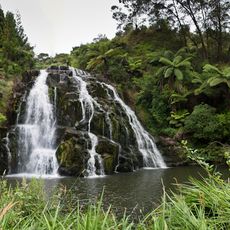
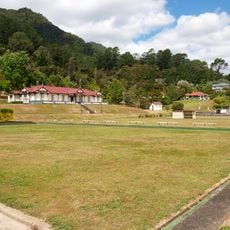
Kopuatai Peat Dome, Protected wetland in Waikato Region, New Zealand.
Kopuatai Peat Dome is a 10,201-hectare peatland complex on the Hauraki Plains, made up of two raised bogs, one north and one south, whose centres stand up to three metres above their edges. Peat in parts of the bog reaches 12 metres thick, and the wetland is ombrotrophic: it takes water and nutrients only from rain, isolated from the surrounding canals and rivers.
The site faced drainage pressures in earlier decades until conservation efforts took control in 1987. This protection prevented further damage and allowed the wetland to recover its natural functions.
The name Kopuatai comes from the Māori language, and the bog lies within the rohe of local iwi. Visitors who reach the wetland see two raised domes whose centres stand up to three metres above the edges, and the peat beneath them reaches 12 metres deep in places. The peat-forming restiad Sporadanthus ferrugineus, called wire rush in English, grows here in New Zealand's largest remaining population.
The bog is hydrologically isolated from the surrounding canals and rivers, receiving water only from rain, so there are no marked walking tracks into the domes. Access is arranged with the Department of Conservation, which has administered the site since 1987. The raised domes stand up to three metres higher at the centre than at the edge.
Kopuatai holds the largest remaining population of Sporadanthus ferrugineus, a peat-forming restiad once widespread in the upper North Island. This plant is the only known food source of Houdinia flexilissima, a moth described only in 2006 and nicknamed 'Fred the thread' for its caterpillar, the thinnest in the world.
The community of curious travelers
AroundUs brings together thousands of curated places, local tips, and hidden gems, enriched daily by 93,888 contributors worldwide.