Weddin Mountains National Park, Nature reserve in New South Wales, Australia
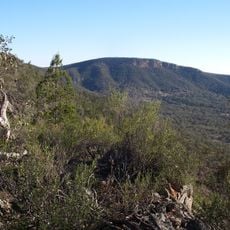
Weddin Mountains National Park is a nature reserve featuring a crescent-shaped mountain range that rises from the surrounding plains with distinct geological features throughout. Cliff lines, caves, deep gullies, and seasonal waterfalls are scattered across the terrain, creating varied landscapes.
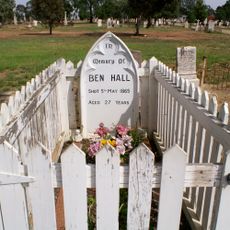
Ben Hall, who raided the Forbes-Grenfell district in the 1850s, used the Weddin Mountains as a refuge, sheltering in a cave on the north-west side of the park with his gang, among them Johnnie Gilbert and Frank Gardiner. A rumour holds that Hall buried treasure here that has never been found. The cave and a nearby camping area carry his name.
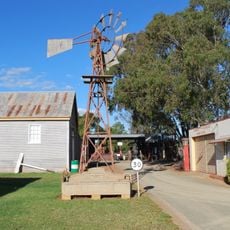
Seaton's Farm shows how people during the 1930s Great Depression built their lives using salvaged and discarded materials found around them. The farmstead reflects the practical ingenuity locals developed to survive economic hardship.
Holy Camp, 19 km south-west of Grenfell, is an entrance with a pit toilet, parking, picnic tables and fireplaces; camping is allowed, but the small tank fed by the toilet roof is unreliable. The last 3.8 km of access road is unsealed. The Eualdrie trail from Holy Camp is signed as 2.6 km return, passing Peregrine Lookout and continuing to the 750 m cairn and down to Ben Halls Cave.
The park records 216 animal species, most of them birds, including the endangered brush-tailed rock wallaby and parrots such as the swift, turquoise and little lorikeet. It forms part of the South-west Slopes of NSW Important Bird Area, listed by BirdLife International for swift and superb parrots. Pest species present include cats, rabbits, foxes, goats and sheep.
The community of curious travelers
AroundUs brings together thousands of curated places, local tips, and hidden gems, enriched daily by 94,070 contributors worldwide.