Pilliga forest, Forest reserve west of Great Dividing Range, New South Wales, Australia
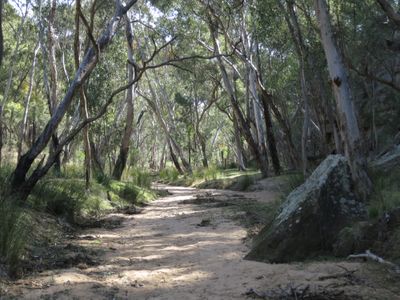
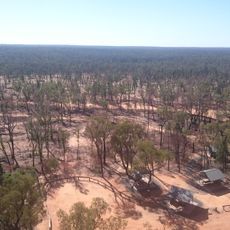
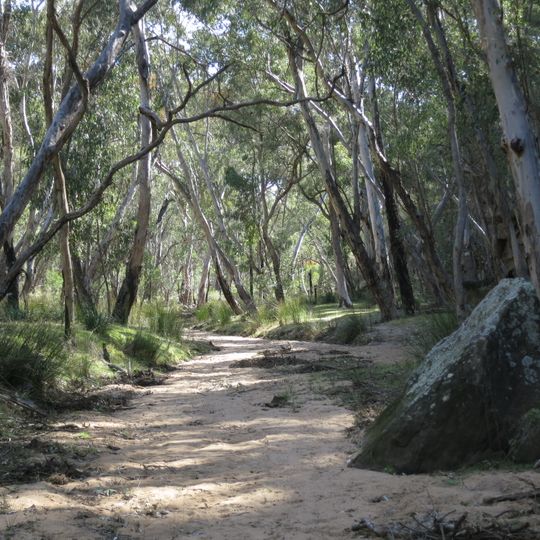
Pilliga Forest is a large woodland reserve covering more than 500,000 hectares, featuring white cypress pines and eucalyptus trees scattered throughout. Sandstone caves and natural salt formations are found across the terrain, creating a varied landscape.
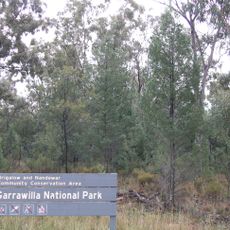
Eric Rolls' 1981 book A Million Wild Acres argued that the Pilliga was open woodland before European settlement and that grazing and fire allowed cypress pine to dominate. Many scientists now dispute this, citing records from the 1870s showing the plant communities had already long been established. Forestry shaped the surrounding towns until 2005, when the NSW government set aside much of the forest for conservation.
The forest lies in Gamilaraay country, and the name Pilliga is used for the village and the scrub. The Sculptures in the Scrub along Dandry Gorge are a modern installation in this landscape. Birdwatchers value the forest for painted honeyeaters and diamond firetails, and the Baradine Visitor's Centre keeps leaflets on local bird species.
Many roads through the scrub are former forestry tracks, and the network is densest around Baradine, where the visitor centre supplies bird-watching leaflets. Salt Caves has a public fire tower, and the Sculptures in the Scrub sit along Dandry Gorge. Tracks are unsealed; check fire conditions before setting out.
The forest is home to rare animal species such as barking owls, malleefowl, and eastern pygmy possums living within its protected environment. These creatures are difficult to spot in most other Australian locations.
The community of curious travelers
AroundUs brings together thousands of curated places, local tips, and hidden gems, enriched daily by 95,615 contributors worldwide.