Sydney Harbour Bridge, Steel through arch bridge in Sydney, Australia
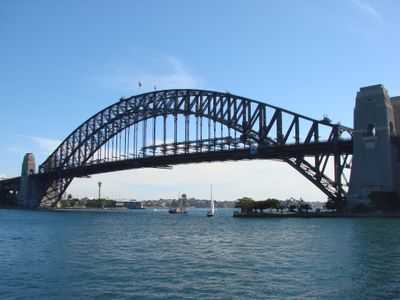
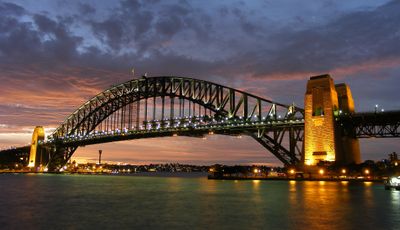
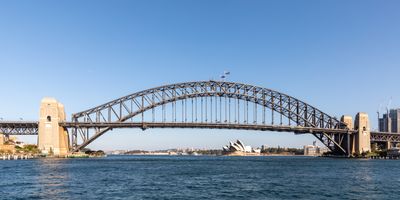
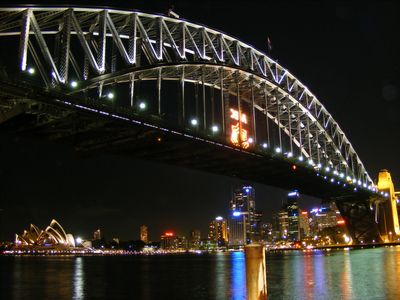
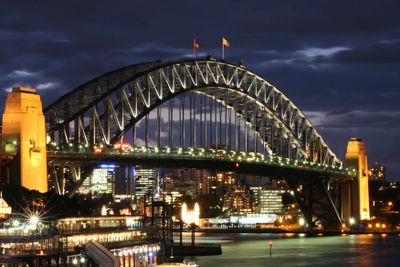
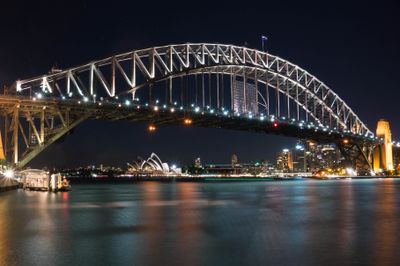
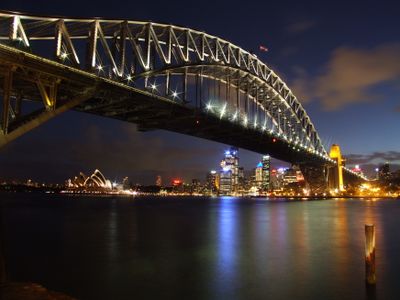
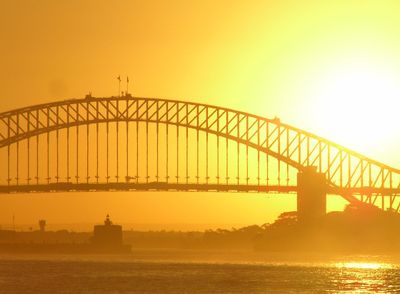
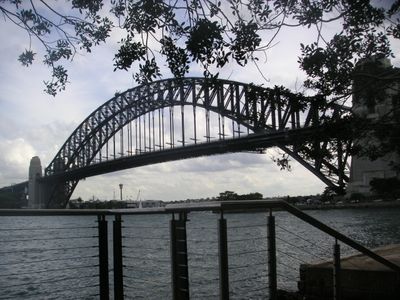
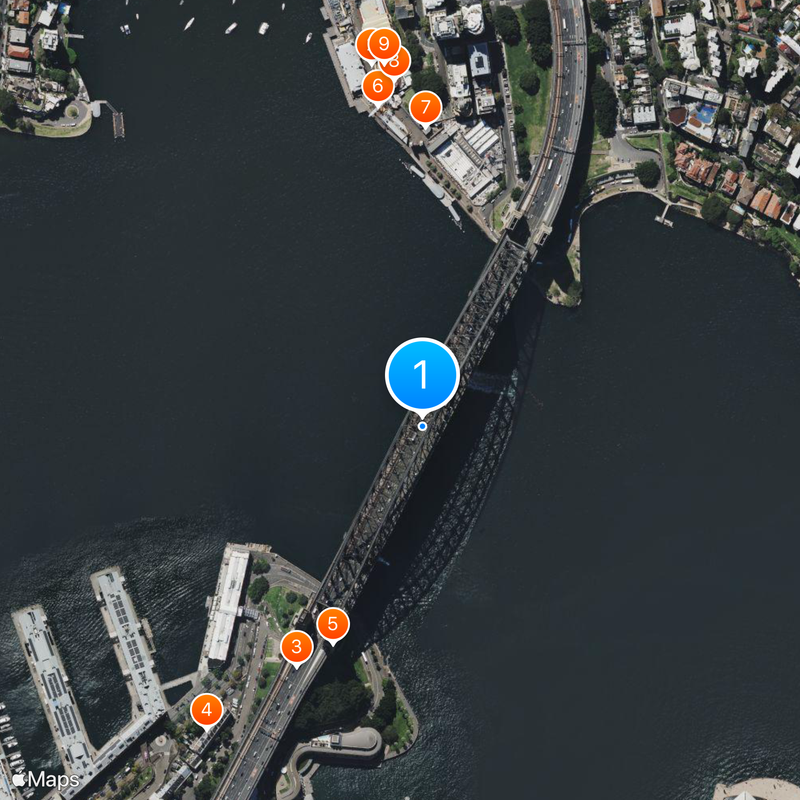
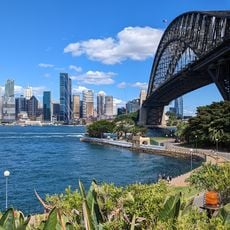
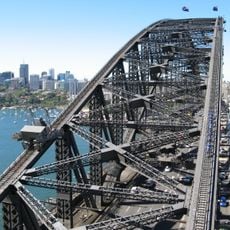
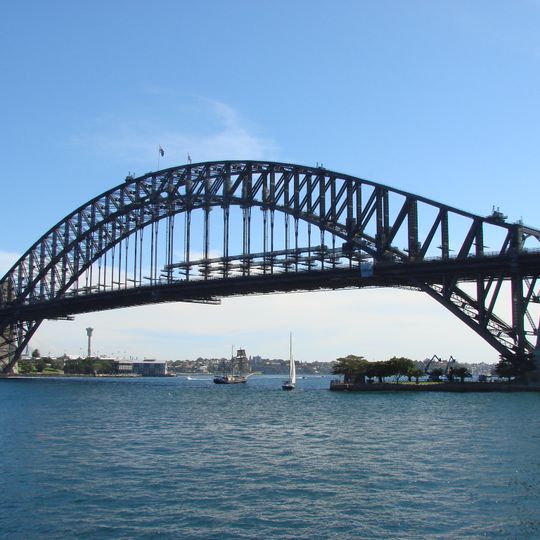
Sydney Harbour Bridge is a steel through arch bridge whose two 28-panel arch trusses span 504 m between granite-faced concrete pylons at Dawes Point and Milsons Point. The deck carries eight road lanes, two railway tracks, a pedestrian path on the east and a bicycle path on the west. The arch rises 134 m above the water, and its steelwork weighs 52,800 tonnes.
Construction ran from 1924 to 1932 under the NSW Department of Public Works, with John Bradfield directing and Dorman Long of Middlesbrough building to Ralph Freeman's detailed plans. About 1,400 men worked on average, 16 died, and the bridge opened on 19 March 1932 during the Great Depression. At the ceremony Francis de Groot, in hussar uniform, rode up and slashed the ribbon with a sabre before Premier Jack Lang could cut it.
Locals call the bridge "the Coathanger" for its arch shape. At the 1932 opening, Francis de Groot, dressed in a hussar uniform, rode up and slashed the ribbon with a cavalry sabre before the premier could do so. The south-eastern pylon now holds a museum and a 360° lookout.
The pedestrian path runs along the eastern side and the bicycle path along the western side, with the North Shore railway line between the roadway and the bike path. Ships pass beneath the arch with 54 m of clearance. The south-eastern pylon has a 360° lookout at the top.
The four granite-faced pylons, 89 metres high, carry no structural load; they were added to reassure the public about the bridge's stability. The south-eastern pylon now holds a museum and a 360° lookout. The arch's steel expands on hot days, raising its summit by up to 18 cm.
The community of curious travelers
AroundUs brings together thousands of curated places, local tips, and hidden gems, enriched daily by 92,087 contributors worldwide.