Very Long Baseline Array, Radio interferometer array in Socorro, New Mexico, United States
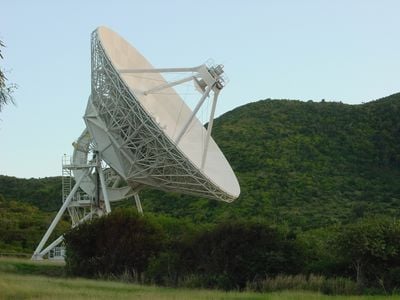
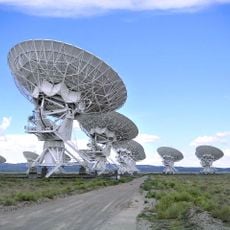
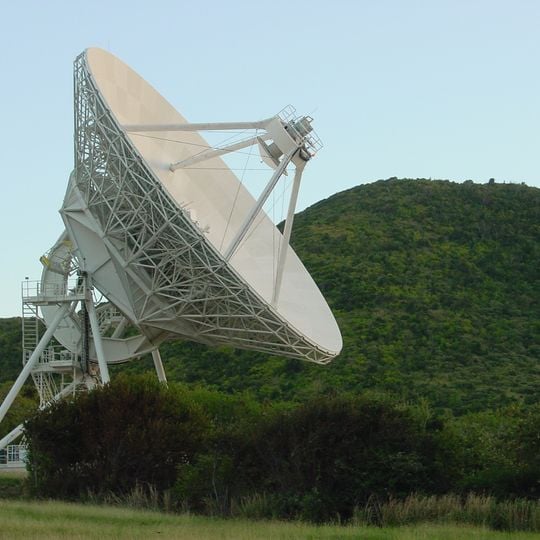
The Very Long Baseline Array is a network of ten radio telescopes distributed across the United States that work together as one astronomical instrument. Each station features a 25-meter parabolic antenna and a control building that receives and processes signals from space.
Construction of the VLBA began in February 1986 and was completed in May 1993, at a total cost of about $85 million. The first astrometrical observation using all ten antennas took place on May 29, 1993. The array is funded by the National Science Foundation and operated by the National Radio Astronomy Observatory from Socorro, New Mexico.
The array's name is often shortened to VLBA, and its ten stations are spread from Hawaii to the Virgin Islands. Astronomers apply for observing time and can add the Green Bank Telescope, the Very Large Array and Effelsberg in Germany, a setup called the High-Sensitivity Array. Data are recorded on hard drives and shipped to Socorro, New Mexico, for processing.
The stations are located in remote areas to avoid interference from radio signals and often require a long drive to reach. The sites are usually not open to the public, but a few occasionally offer visitor days or information panels.
The signals from individual antennas are recorded on hard drives and transported to the headquarters, where they are synchronized using atomic clocks. This process allows the creation of images with a resolution roughly 50 times sharper than the Hubble Space Telescope.
The community of curious travelers
AroundUs brings together thousands of curated places, local tips, and hidden gems, enriched daily by 94,678 contributors worldwide.