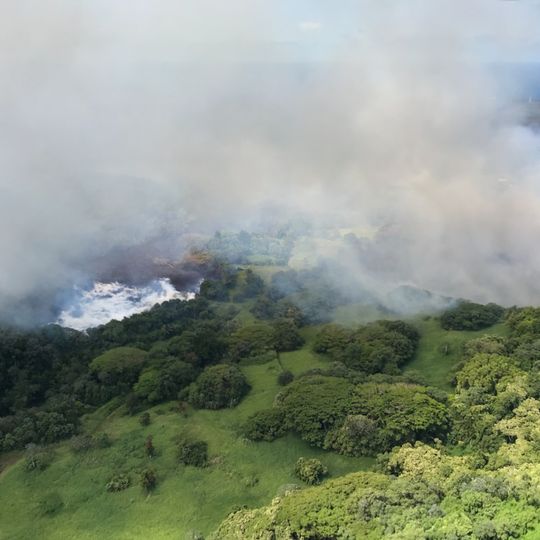
Green Lake, Freshwater crater lake in Kapoho, Hawaii.
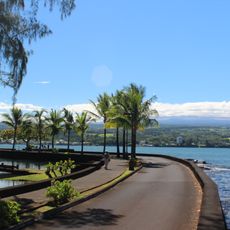
Green Lake, known in Hawaiian as Ka Wai o Pele, was a freshwater crater lake in Puʻu Kapoho crater on Hawaiʻi Island. It covered 0.8 hectares (2.0 acres) and reached a maximum depth of 61 metres (200 ft), making it the largest natural freshwater lake in the Hawaiian Islands. Hibiscus tiliaceus and other vegetation overhung the water, shading about twenty percent of its surface.
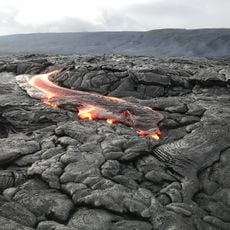
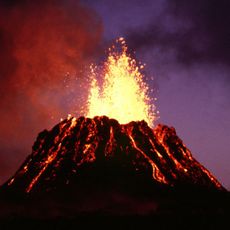
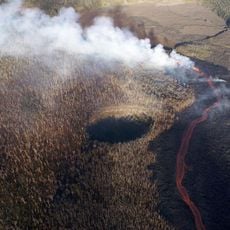
The lake persisted for roughly four centuries before Kilauea's eruption in June 2018 sent lava into its basin. The incoming lava rapidly heated and evaporated the entire body of water.
The lake's Hawaiian name, Ka Wai o Pele ("the water of Pele"), comes from a myth that it was the first place Pele, the volcano deity, visited. Before 2018 it was a popular swimming spot for residents and tourists, with Hibiscus tiliaceus trees overhanging about twenty percent of the surface.
Green Lake no longer exists: on 2 June 2018 lava from Kīlauea's lower Puna eruption boiled the water away and filled the basin in about five hours. The crater lies in the Puʻu Kapoho area of Puna, on Hawaiʻi Island. What remains is solidified lava, so there is no lake to swim in or view.
The lake's Hawaiian name, Ka Wai o Pele ("the water of Pele"), ties it to the volcano deity, who Hawaiian myth says first visited this spot. The basin lay in Puʻu Kapoho crater, and Hibiscus tiliaceus trees overhung the water, shading about twenty percent of its surface.
The community of curious travelers
AroundUs brings together thousands of curated places, local tips, and hidden gems, enriched daily by 92,658 contributors worldwide.