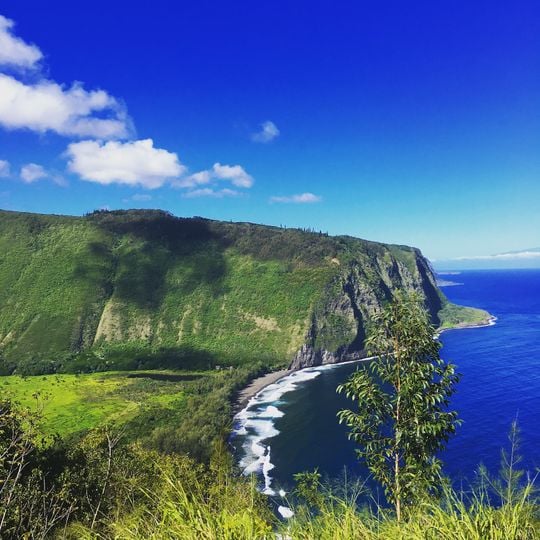
Waipio Valley, Valley and black sand beach in Hāmākua, Hawaiʻi Island, US
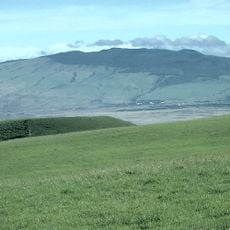
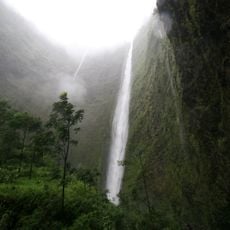
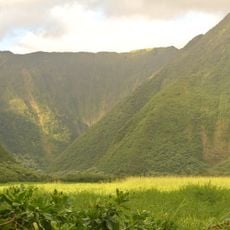
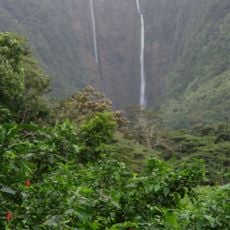
Waipiʻo Valley is a valley in the Hāmākua District of Hawaiʻi Island whose floor lies almost 2,000 ft (610 m) below the surrounding terrain, formed by stream erosion in weak basalt lava from the Kohala volcano. A black sand beach popular with surfers lines the shore, a few taro farms sit on the floor, and several large waterfalls feed the river that runs from the foot of the largest fall at the back of the valley out to the ocean.
Waipiʻo was the capital and permanent residence of early Hawaiian aliʻi until the time of King ʻUmi; Kahaimoelea was the first chief to hold court there. In the 18th century Kahekili II of Maui raided the valley and burned its four sacred nioi trees. The 2006 Kiholo Bay earthquake collapsed a cliff at the valley entrance into the ocean and caused rock falls on the access road.
Waipiʻo means "curved water" in Hawaiian, and the valley was the capital and permanent residence of early Hawaiian aliʻi up to the time of King ʻUmi; Kahaimoelea was the first chief to hold court there. It was celebrated for its nioi trees, the Nioi wela o Pakaʻalana, and Hawaiian folklore holds that the gateway to Lua-o-Milu, the underworld, was hidden here by sand. A few taro farms remain on the valley floor.
The valley is only partly accessible to visitors since most roads are restricted to residents and authorized tour operators. The best way to see the valley is from the viewpoint at the clifftop overlooking the entire area.
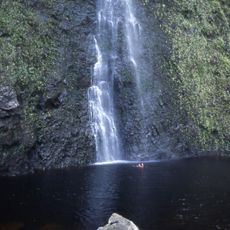
The valley is known for its exceptionally tall waterfalls, with Hi'ilawe Falls being among the highest on the island. During rainy seasons, dozens of waterfalls cascade down the cliff walls at the same time.
The community of curious travelers
AroundUs brings together thousands of curated places, local tips, and hidden gems, enriched daily by 93,024 contributors worldwide.