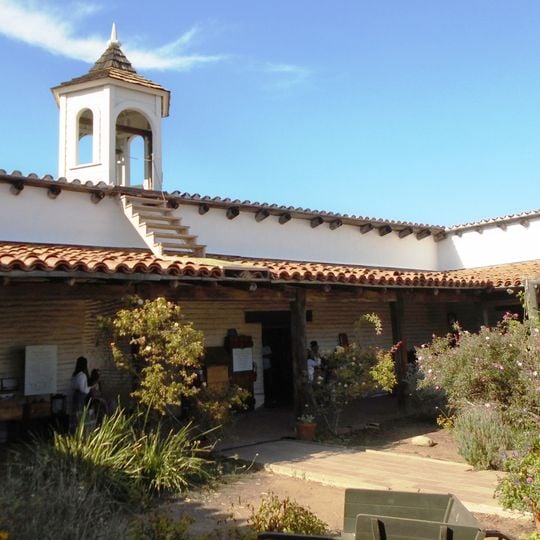
Casa de Estudillo, Spanish Colonial adobe house in Old Town, San Diego, United States
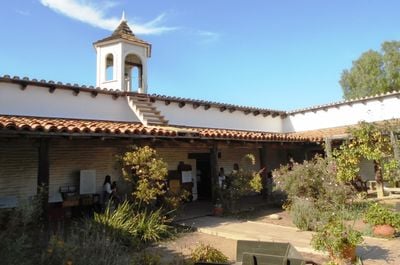
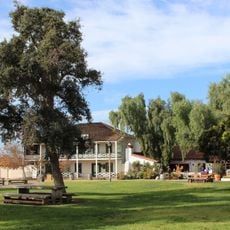
Casa de Estudillo is a U-shaped Spanish Colonial adobe house measuring 113 feet (34.4 m) across the front and 98 feet (29.9 m) along each wing. Its 13 rooms are set consecutively and linked only by an external covered corredor rather than an interior hallway. The west-facing entrance sits in the center, with the chapel to its left and the schoolroom to its right.
José María Estudillo and his son José Antonio built the adobe house in 1827; it was considered one of the finest houses in Mexican California. The family lived there until 1887, when they moved to Los Angeles. In 1906 John D. Spreckels bought the dilapidated building and had architect Hazel Wood Waterman restore it by 1910, removing the original cupola and balcony to match the novel Ramona.
The house is tied to the novel Ramona: in 1887 the San Diego Union called it "Ramona's Marriage Place", though Helen Hunt Jackson never visited it. A tourist had already scratched "Alessandro", the husband's name in the book, into a wall. The caretaker then sold pieces of the house as souvenirs, and manager Tommy Getz later marketed it with postcards and hosted weddings there.
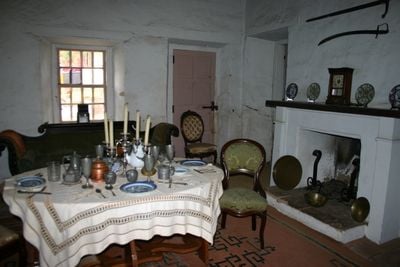
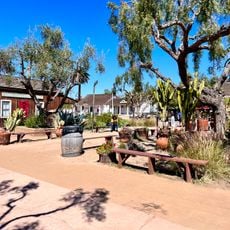
Visitors can walk through furnished rooms that show how the family lived and worked in the 19th century. The central courtyard provides a shaded space to rest and understand the layout of the entire structure.
The house had a cupola from which the family could watch bullfights and festivals in the adjacent plaza. Hazel Wood Waterman removed it in the 1910 restoration because the novel Ramona, which the house was being remade to match, never mentions one.
The community of curious travelers
AroundUs brings together thousands of curated places, local tips, and hidden gems, enriched daily by 92,821 contributors worldwide.