United Provinces of Central America, Historical republic in Central America
The United Provinces of Central America was a federal union that existed from 1823 to 1840, joining Guatemala, Honduras, El Salvador, Nicaragua, and Costa Rica into a single political entity. The federation stretched from Mexico's southern border to the Panama region and held coastlines on both the Pacific Ocean and the Caribbean Sea.
The federation was born in 1823 after Central America gained independence from Spain and briefly joined the Mexican Empire, before establishing itself as a separate political body based in Guatemala City. Growing tensions among the member provinces eventually led to the federation's dissolution in 1840.
Spanish remained the shared language across all member territories, while the federation adopted a constitution that balanced regional self-rule with central coordination. This mix of local authority and federal structure shaped how the different regions interacted and governed themselves.
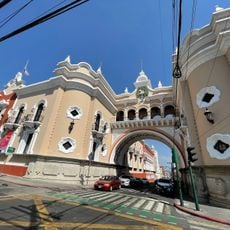
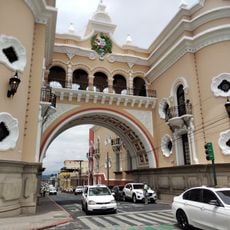
As a historical political structure, the federation no longer exists as a functioning entity, but visitors can explore locations connected to its history, especially in Guatemala City. Museums and historical archives in the former member nations preserve documents and artifacts from this era.
The federation adopted a constitution based closely on the United States political system, which was unusual for the region at that time. This alignment with North American principles set it apart from other Latin American nations of the era.
The community of curious travelers
AroundUs brings together thousands of curated places, local tips, and hidden gems, enriched daily by 92,472 contributors worldwide.