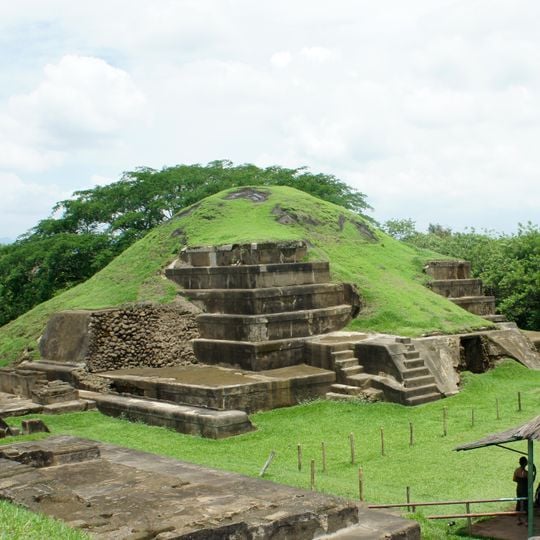
San Andrés, El Salvador, Archaeological site in Ciudad Arce, El Salvador.
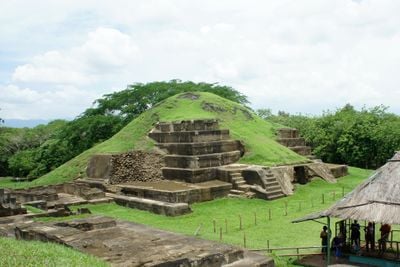
San Andrés is an archaeological site in Ciudad Arce, El Salvador, with several pyramids, plazas, and ceremonial buildings spread across two main areas: the South Seat and the North Seat. The structures rise on artificial mounds of packed earth and are connected by broad pathways that run between open courtyards.
Occupation began around 900 BC as an agricultural village in the Zapotitán valley. It was abandoned after the Tierra Blanca Joven eruption of the Ilopango caldera (dated between AD 420 and 540), then reoccupied in the 5th century. Between AD 600 and 900 San Andrés was the capital of a Maya polity ruling the valley, and it was abandoned before the El Boquerón eruption of AD 964–1040. After the Spanish Conquest the ruins lay within a colonial estate of cattle and indigo.
The name comes from the colonial hacienda and indigo works established after the Spanish conquest, not from a town of Saint Andrew. Visitors can still see the indigo production area buried by the Playón eruption of 1658 and preserved under ash. The site museum displays censers and ceramics painted in Mixteca-Puebla style from the Guazapa phase, linked to Cihuatán.
The park has laid-out paths leading to the main structures, and information panels explain the function of each area along the route. A small museum near the entrance displays ceramics, tools, and jewelry found during excavations and offers context for walking through the complex.
Beneath the pre-Columbian ruins lie the remains of colonial indigo production facilities buried by the Playón volcanic eruption of 1658. This layering of two eras in one place shows how volcanic activity repeatedly interrupted and reshaped human settlement in the region.
The community of curious travelers
AroundUs brings together thousands of curated places, local tips, and hidden gems, enriched daily by 92,748 contributors worldwide.