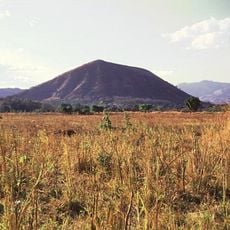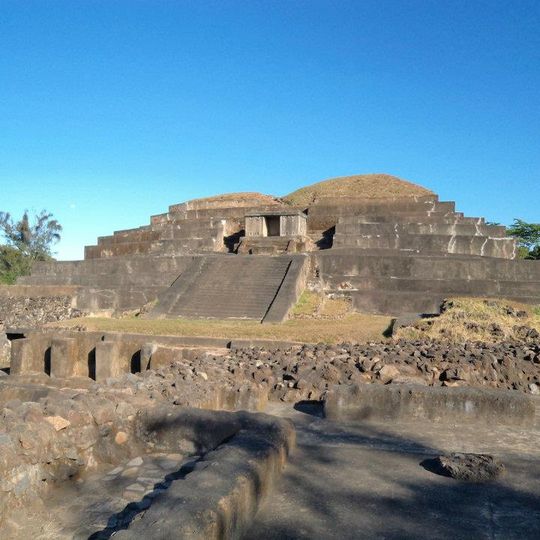
Tazumal, Maya archaeological site in Chalchuapa, El Salvador.
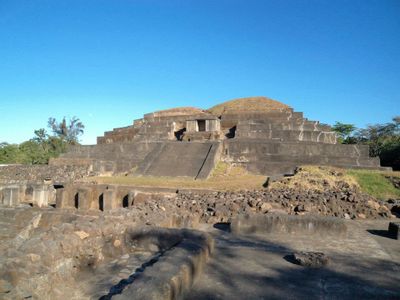
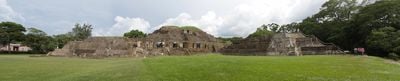
Tazumal is an archaeological site in Chalchuapa, western El Salvador. Its main structure, B1-1, consists of a large platform 73 by 87 metres and about 7.5 metres high, topped by a pyramid roughly 33 by 45 metres and 16 metres high, giving a total height of about 24 metres. A wide central staircase with sloping stone balustrades climbs the west face toward a small rectangular enclosure at the top. A rounded mound, structure B1-2, stands behind and to the right.
People settled here around 1000 BC and began raising larger structures around 100 AD. The Ilopango eruption about 540 caused an interruption, but from 650 onward the pyramid took its present form through several rebuilding phases until abandonment around 1200.
The name Tazumal comes from the estate where the main structures stood when Stanley Boggs began excavations in the 1940s. The site was a Maya ceremonial centre in the Classic period and later showed Nahua (Pipil) influence until about AD 1200. In front of Structure B1-1 stands the Tazumal stela, found in 1892 by Santiago I. Barberena; it depicts a Late Classic ruler wearing a headdress with the face of Tlaloc.
The site lies at 720 metres above sea level in the Chalchuapa archaeological zone, about 80 km west of San Salvador. All the buildings of the complex face west, so the main stairway of Structure B1-1 is best seen from the western forecourt. The ground is worn stone and earth bordered by rough volcanic rock, and the upper tiers are moss-covered.
Excavations revealed three gold ornaments from the 8th century, a rare find in the Maya region where metalwork remained uncommon. A burial beneath one platform contained pottery from Teotihuacan, showing direct contact between distant cultures.
The community of curious travelers
AroundUs brings together thousands of curated places, local tips, and hidden gems, enriched daily by 92,784 contributors worldwide.