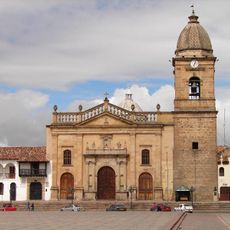
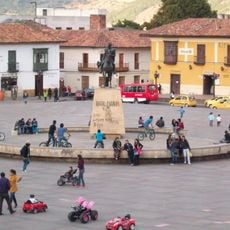
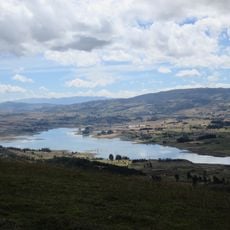
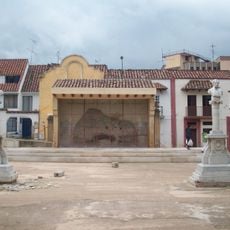
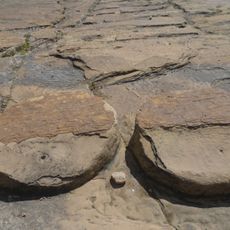
Conejo Formation, Geological formation in Toca, Colombia.
The Conejo Formation is a geological sequence in Colombia's Eastern Ranges. It displays layers of calcareous sandstone and shale interspersed with limestone banks that extend across a considerable thickness.
The formation was named in 1967 after El Conejo Hill near the Copa Reservoir in the Pontezuela area. This naming reflected the geological significance of the region and its role in understanding Andean development.
Scientists study the formation to understand the geological development of Northern South America through its extensive fossil collection and stratigraphic sequences.
The formation can be viewed at several outcrops distributed across urban areas near Boyacá, Ventaquemada, and the Puente de Boyacá monument. Multiple accessible sites make it possible to examine different sections of the layers in a single visit.
The layers contain well-preserved fossil specimens of marine organisms including ammonites and small foraminifera from the Mesozoic era. These deposits reveal that the region was once covered by shallow seas that preserved these organic remains.
The community of curious travelers
AroundUs brings together thousands of curated places, local tips, and hidden gems, enriched daily by 92,523 contributors worldwide.