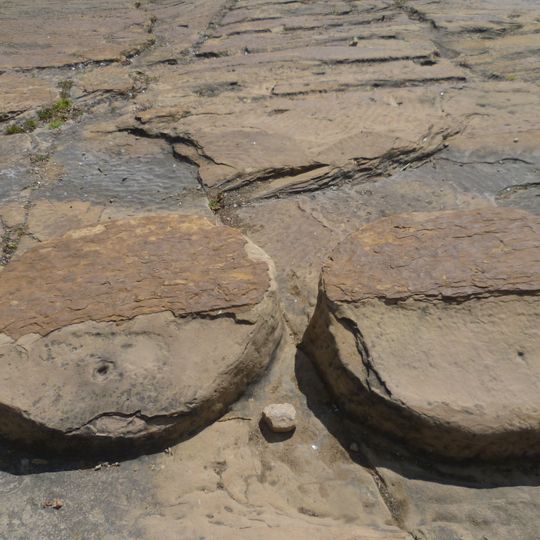
Cojines del Zaque, Pre-Columbian ceremonial stones in Tunja, Colombia
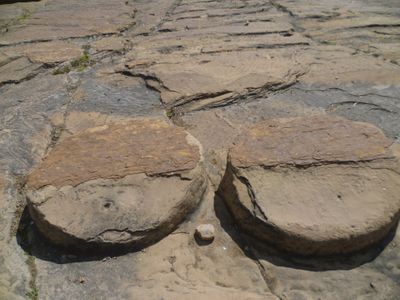
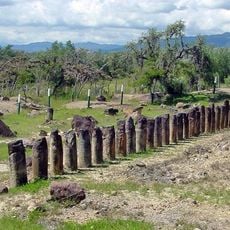
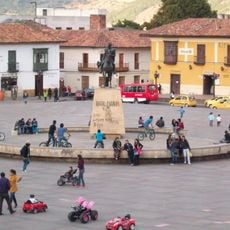
Cojines del Zaque consists of two circular sandstone blocks standing in central Tunja as archaeological evidence of pre-Columbian times. These solid formations show skilled craftsmanship and once served as central points for religious and administrative activities of the region's early inhabitants.
The stones originated during the Muisca Confederation period and played a central role in the administration and religious practice of northern territories. Their survival across centuries reflects their importance to that society and their resilience against time.
The stones held deep meaning for the Muisca people beyond their physical form, serving as gathering points where spiritual practices and daily rituals intersected. Visitors can sense how this location connected the community to their beliefs about the natural world and their place within it.
The site sits centrally in Tunja and is easily reachable on foot or by public transport, requiring no special equipment or prior knowledge. Visitors should prepare for simple walking and will find the best views during daytime with good weather conditions.
The stone surfaces are shaped to follow the sun - the eastern side is flat and the western side is inclined, showing how the people integrated celestial movements into their construction. These subtle details are easy to overlook, but for those who look closer, they reveal how ancient inhabitants understood their environment.
The community of curious travelers
AroundUs brings together thousands of curated places, local tips, and hidden gems, enriched daily by 60,000 contributors worldwide.