Yacimiento rupestre de Sáchica, Pre-Columbian rock art site in Sáchica, Colombia.
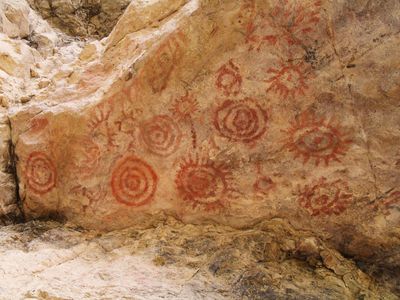
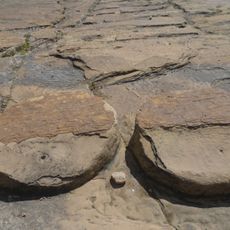
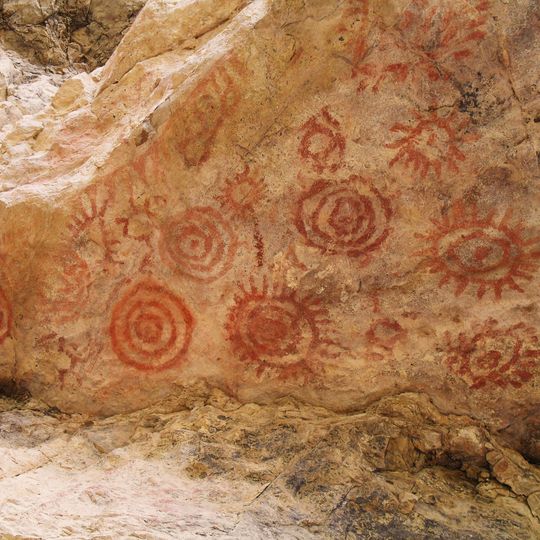
Yacimiento rupestre de Sáchica is an archaeological site with several groups of red and black paintings spread across about 40 meters of rock formation beside the Sáchica River. The paintings show naturalistically rendered human faces, circular symbols, and other shapes applied to the surface using mineral pigments.
The site was examined in 1961 by anthropologist Eliécer Silva Célis from ICANH, who identified naturalistic representations, human faces, and circular symbols on the rocks. This early study was crucial in documenting and recognizing these pre-Columbian artworks in the region.
The rock paintings display round and radial shapes in red pigment, reflecting the artistic expression of pre-Columbian people living in the Colombian highlands. These simple yet meaningful motifs offer insight into the thoughts and skills of the early artists who created them.
The rock art site lies near the Sáchica River and requires careful walking to avoid damaging the delicate painted surfaces. Visitors should bring good lighting to see the red and black motifs clearly from different angles.
Researchers documented 14 distinct painting groups at the location, with some showing sun imagery and humanoid figures while others feature plant representations and mysterious geometric patterns. This variety suggests the rock art was expanded over time by different artist groups.
The community of curious travelers
AroundUs brings together thousands of curated places, local tips, and hidden gems, enriched daily by 91,776 contributors worldwide.