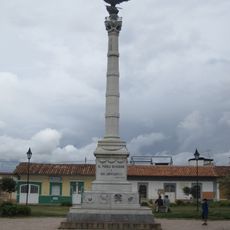
Monumento a la Raza Indígena, Stone sculpture group at Glorieta Norte in Tunja, Colombia.
The Monumento a la Raza Indígena is a stone sculpture group positioned at Glorieta Norte in Tunja and presents two human figures in contrasting poses. Garden areas frame the monument and help define this public space.
The monument was created in 1964 by artist Miguel Sopó Duque from Zipaquirá and references events from the 1500s in this region. It marks a significant moment in the story of the Muisca people and their encounter with European powers.
The fallen figure represents Cacique Aquiminzaque, the last zaque of Hunza, and the standing woman Adeizagá, daughter of the cacique of Gámeza and his betrothed. Their planned marriage in Hunza was read by the Spanish as an uprising, and both were executed in 1540. Each December a large Christmas light tree is installed beside the monument.
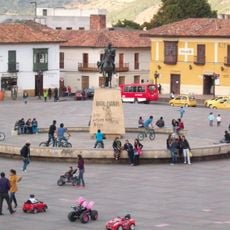
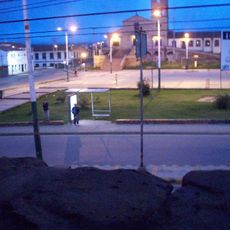
The monument sits in an active public plaza and is easy to reach when walking through central Tunja. The space may look different depending on the season, particularly when the city adds holiday decorations.
The monument shares its Glorieta Norte setting with a green-and-white pavilion of the Club de Leones, which holds two lion figures at its centre and a small plaza. Each Christmas the city erects its large tree of lights beside the sculptures, and the adjoining garden is kept for the season.
The community of curious travelers
AroundUs brings together thousands of curated places, local tips, and hidden gems, enriched daily by 93,769 contributors worldwide.