Bridge of the Americas, Steel cantilever bridge at Panama Canal entrance, Panama
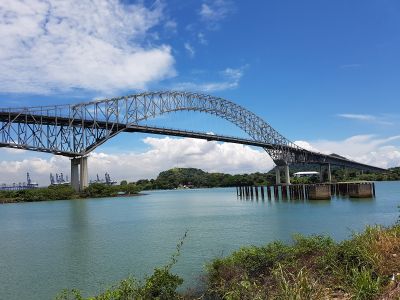
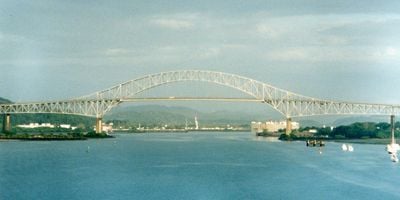
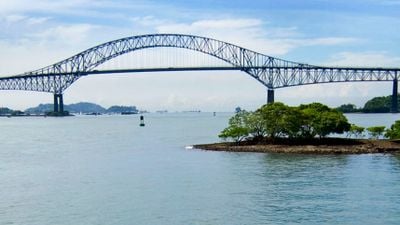
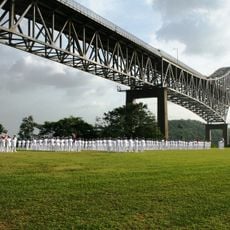
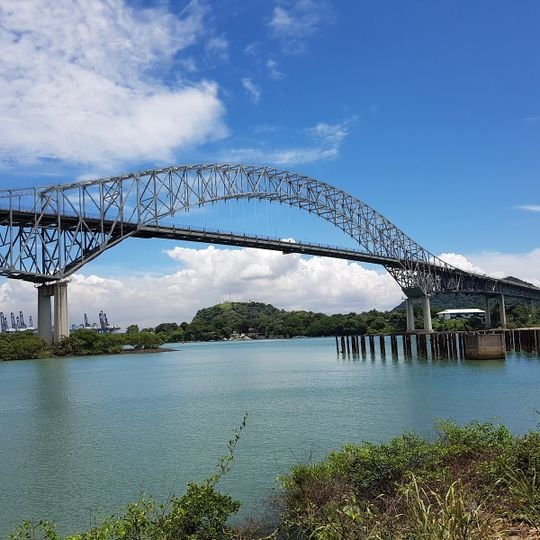
The Bridge of the Americas is a steel cantilever bridge at the Pacific entrance of the Panama Canal in Balboa, Panama. The structure consists of concrete and steel with a central span that crosses the waterway while reaching a height that allows large ships to pass underneath.
The United States built the crossing between 1959 and 1962, creating the first permanent road link across the canal. Completion allowed the Pan-American Highway to run continuously from north to south.
The name was chosen by Panama's Legislative Assembly, which formalized "Puente de las Américas" by resolution on 2 October 1962, ten days before the inauguration, because the bridge links the landmasses of North and Central America with South America, cut apart by the canal in 1914. The United States had wanted to call it Thatcher Ferry Bridge, after Maurice H. Thatcher, who introduced the legislation creating the ferry it replaced; he cut the ribbon in 1962, and a group of students climbed the girders to plant the Panamanian flag.
The crossing remains open to traffic at all times and sits near the canal shore, where viewing areas offer a good look at passing ships. Large vehicles share the roadway with passenger cars, so staying alert while crossing is advisable.
Until the Centennial Bridge opened in 2004, this crossing was the only fixed route over the canal. The construction required accounting for tides and saltwater, which brought special demands on materials.
The community of curious travelers
AroundUs brings together thousands of curated places, local tips, and hidden gems, enriched daily by 93,780 contributors worldwide.