Casino de la Selva, Architectural complex in Cuernavaca, Mexico
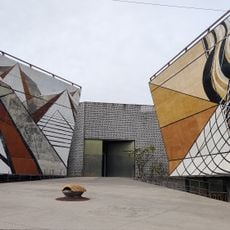
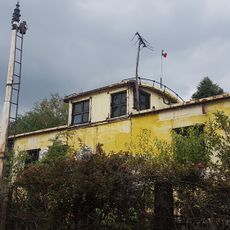
Casino de la Selva was an architectural complex in Cuernavaca that sprawled across a large property with gardens, natural springs, and multiple structures. The buildings featured distinctive concrete paraboloid shell roofs, a design choice that defined the property's modern appearance.
The Casino de la Selva opened in 1931 as a hotel and casino, built by contractor Manuel Suárez y Suárez for the Compañía Hispanoamericana de Hoteles near Cuernavaca's railway station. After President Lázaro Cárdenas banned gambling in 1934, Suárez, the main creditor, took over the property and ran it as a hotel. In 1946 Vías y Obras, the firm of Suárez and architect Jesús Martí Martín, added second floors to the room blocks and a French-style garden; at the end of the 1950s Félix Candela's company roofed a dining room and a chapel with hyperbolic paraboloid shells.
Murals inside the buildings were signed by Mexican painters José Reyes Meza, Guillermo Ceniceros, David Alfaro Siqueiros, Jorge Flores, Francisco Icaza and Jorge González Camarena, alongside the Valencian Josep Renau, who painted on Hispanidad. Francisco Icaza's La farándula, in the auditorium, honoured Bertolt Brecht. Most were destroyed during the 2001 demolition.
The property contained accommodation blocks, an Olympic swimming pool, restaurants, event halls, and recreational facilities throughout its operation. Since the site was demolished in 2001, visitors interested in its history cannot see the physical structures themselves.
Malcolm Lowry moved to Cuernavaca in 1938 to work on Under the Volcano and described the hotel in the novel's first chapter, noting its empty spring-boards, grass-grown jai-alai courts and the ghosts of ruined gamblers, since gambling had been banned in 1934.
The community of curious travelers
AroundUs brings together thousands of curated places, local tips, and hidden gems, enriched daily by 94,519 contributors worldwide.