Cerro Culiacán, Mountain in Guanajuato, Mexico
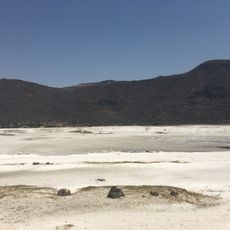
Cerro Culiacán is a solitary, nearly regular cone rising about 1,730 metres above the plain of southern Guanajuato, with its summit on the boundary of Cortazar and Salvatierra and its western slopes reaching into Jaral del Progreso. Sources give its height as 2,830 or 2,834 metres, and telecommunication installations stand on the summit.
The mountain's recorded history centres on its sacred role: archaeological remains on its slopes suggest it was the origin of several cultures, and it is identified in legend with the mythical Aztlán, called Teoculhuacan Chicomoxtoc, "place of seven caves". In 1923, when the churches of El Sabino and Cañada de Caracheo were consecrated, Bishop Leopoldo Ruiz y Flores said that had he known Cerro Culiacán earlier he would have proposed it as the national mountain of Christ the King instead of the Cubilete.
Residents call the hill Teoculhuacan Chicomoxtoc, "place of seven caves", and a local legend identifies it with the mythical Aztlán, origin of the Tepanec, Xochimilca, Chalca, Acolhua, Tlahuica, Tlaxcalteca and Mexica peoples. On the eve of 3 May, pilgrims hold a feast of the Holy Cross at the summit, linked to the cult of the Señor de los Cuatro Vientos.
A 9-kilometer stone road allows vehicles to reach the summit where telecommunication towers transmit signals. The paved access makes the summit relatively accessible for visitors.
A local legend holds that the mountain is the mythical Aztlán, origin of the peoples of the Valley of Mexico, which is why some residents call it Teoculhuacan Chicomoxtoc, meaning Place of Seven Caves. Another tale says the guerrilla Albino García Ramos hid treasure looted during the independence era in one of its caves.
The community of curious travelers
AroundUs brings together thousands of curated places, local tips, and hidden gems, enriched daily by 94,419 contributors worldwide.