Lake Cuitzeo, Freshwater lake in Michoacán, Mexico
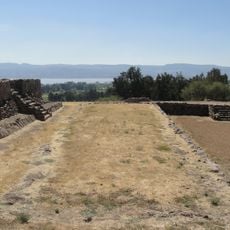
Lake Cuitzeo is an endorheic lake in the Trans-Mexican Volcanic Belt, mostly in Michoacán with a small part in Guanajuato. It covers 300–400 km², is no deeper than ten metres, and is Mexico's second-largest freshwater lake. Its irregular shape joins northern, western and eastern sections through a central marshy area that receives the main freshwater inflows.
Lake Cuitzeo is a remnant of a larger lake that persisted between the Pliocene and Holocene epochs, when tectonic and volcanic processes alternately connected and separated it from the ancient Zacapu lagoon. In the 20th century, an outflow canal was cut at the low point of the basin's rim, allowing the lake to drain via Lake Yuriria into the Lerma River when water levels are high; this limits the lake's surface elevation to 1,830 meters. The western section was later divided in two by the construction of north-south highways.
Communities around the lake practice traditional fishing and farming that have sustained families through generations. These ways of life shape how people relate to the water and use its resources daily.
The lake sits about 30 kilometers north of Morelia and is accessible via roads with multiple entry points along the shoreline. Expect flat terrain and water levels that vary noticeably between seasons.
The lake basin is the only habitat of Thamnophis eques cuitzeoensis, a semi-aquatic subspecies of the Mexican garter snake that is essentially harmless. In the saltier western section, fishers take clam shrimps (Eocyzicus digueti and Leptestheria compleximanus), an unusual catch for an inland lake.
The community of curious travelers
AroundUs brings together thousands of curated places, local tips, and hidden gems, enriched daily by 93,845 contributors worldwide.