Alamo Mission, Spanish mission station in San Antonio, United States
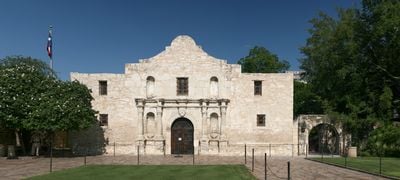
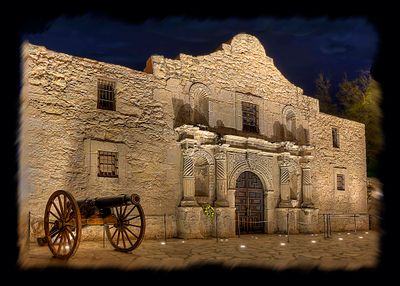
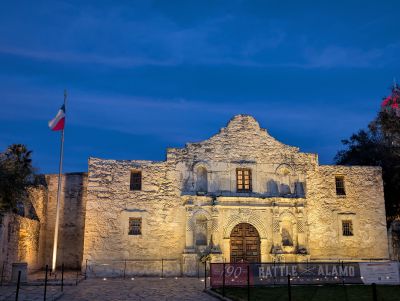
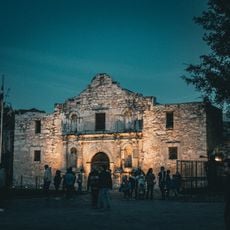
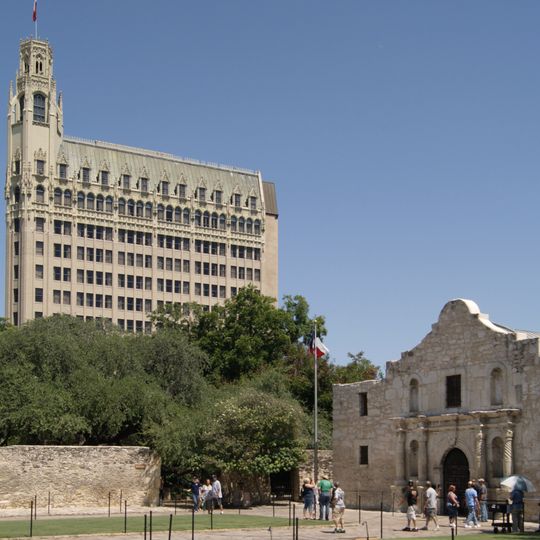
The Alamo Mission in San Antonio is an 18th-century mission station in the center of the Texas city, now serving as a memorial and museum. The compound includes a chapel with a curved facade, low barracks rooms, and courtyards enclosed by thick limestone walls.
Franciscan friars founded the site in 1718 as an outpost and community center for converting indigenous people. The compound became the scene of a weeks-long siege in 1836, when Texan rebels fought the Mexican army.
The name "Alamo" most likely comes from the Compañía Volante de San Carlos de Parras, known as del Álamo de Parras, the cavalry unit stationed here from 1803; another explanation points to the álamo, the cottonwoods that shaded the mission. The site is now a museum drawing about 2.5 million visitors a year, and since 2015 it has been part of the UNESCO San Antonio Missions World Heritage Site.
Access is through several entrances in the downtown area, with the main entrance located at a busy intersection and easy to reach on foot. Most areas are accessible at ground level, while some older sections have uneven stone floors.
The chapel that visitors see today was sold to the state of Texas after the U.S. Army left in 1876, and it stood largely neglected until Adina Emilia de Zavala and Clara Driscoll persuaded the legislature to buy the buildings in 1905. Restoration began in 1912 under Governor Oscar B. Colquitt. The musician Phil Collins donated more than 200 items, documents and illustrations from his collection to the Alamo in 2014.
The community of curious travelers
AroundUs brings together thousands of curated places, local tips, and hidden gems, enriched daily by 92,763 contributors worldwide.