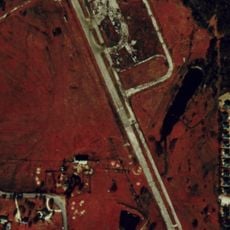
Paw Paw Formation, Geological formation in North Texas, United States.
Paw Paw Formation is a rock layer in North Texas composed of brown clayey sandstone that extends beneath the Main Street limestone layer. The formation displays varying thicknesses as you move across the region from west to east.
This rock layer formed roughly 97 to 98.5 million years ago during the Cretaceous period when shallow seas covered the region. The deposits record a time when marine life thrived and sediments accumulated steadily.
Research at the formation contributes to paleontological studies through discoveries of ammonites, clams, corals, fish teeth, and vertebrae specimens.
Visitors can observe this formation at several locations across Denton, Tarrant, and Johnson Counties where natural outcrops and excavations expose the layers. The best time to view the sections clearly is during dry weather when erosion and weathering reveal the details.
A special section called the Pyrite Fossil Zone contains iron pseudomorphs and preserved marine creatures in the lower portion of the formation. This area is valuable to paleontologists because the fossil preservation in this zone is exceptionally good.
The community of curious travelers
AroundUs brings together thousands of curated places, local tips, and hidden gems, enriched daily by 60,000 contributors worldwide.