Tulane Stadium, American football stadium in New Orleans, United States
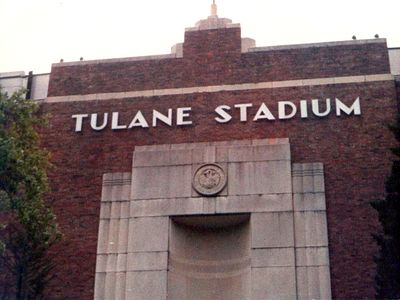
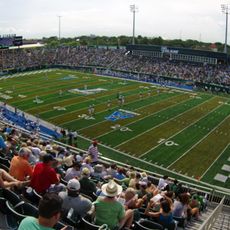
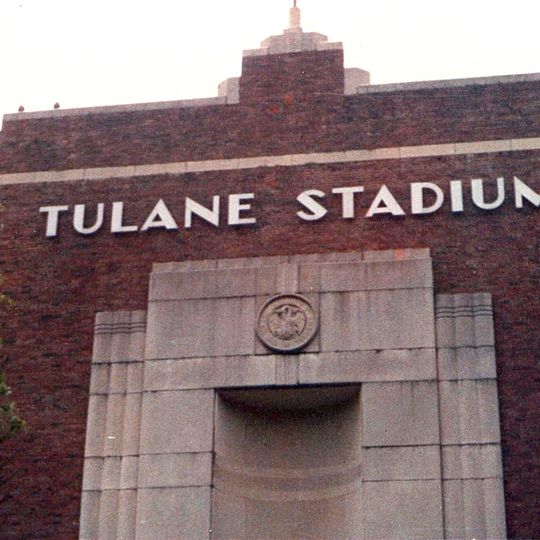
Tulane Stadium was a concrete and steel bowl on Tulane University's campus in Uptown New Orleans, with four sections separated at the field corners and a short steel upper deck wrapping the sides and north end. The press box sat on the western side, and the main gate faced Willow Street at the south end.
Tulane Stadium opened in 1926 with about 35,000 seats, built on university land where, before 1871, Étienne de Boré had first granulated sugar from cane syrup. The north end was enclosed in 1937 to form a 49,000-seat horseshoe, and the south end was closed in 1947 to create an 80,735-seat bowl. The stadium was demolished between November 1979 and June 1980.
The Sugar Bowl name came from Fred Digby, sports editor of the New Orleans Item, who pushed for an annual New Year's Day game from 1927; the first was played here on January 1, 1935, with host Tulane facing Temple. Locals also called the stadium "the Sugar Bowl" itself, and it was billed as "The Queen of Southern Stadiums".
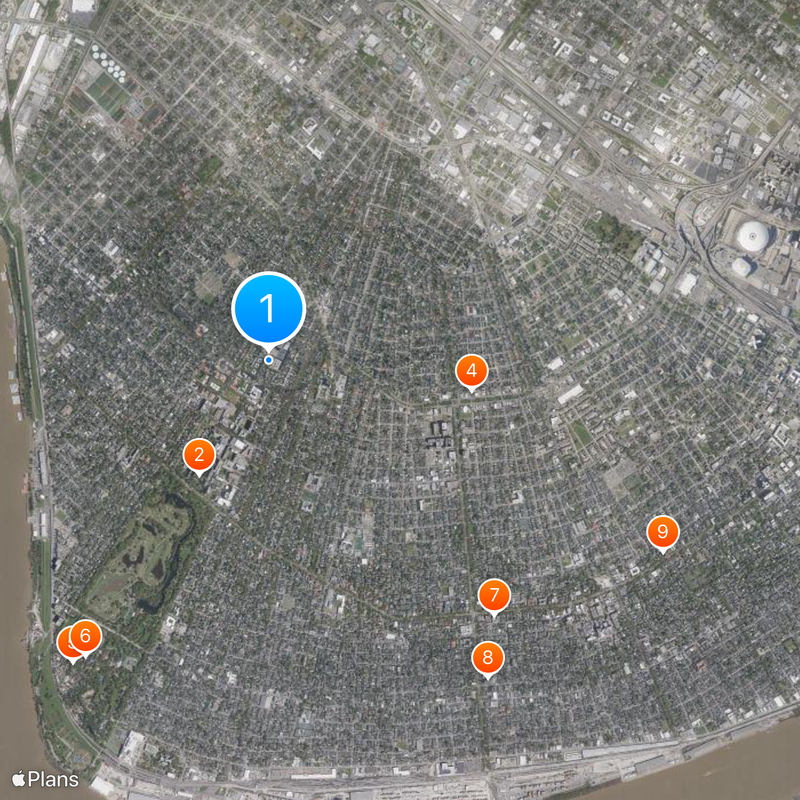
The site is bounded by Willow Street to the south, Ben Weiner Drive to the east, the university property line west of McAlister Place, and the Hertz Basketball/Volleyball Practice Facility and Yulman Stadium to the north. The field survives as Brown Field, used for soccer, and Yulman Stadium opened just north of it in 2014.
The Sugar Bowl name came from Fred Digby, sports editor of the New Orleans Item, who pushed for an annual New Year's Day game from 1927; it was not derived from the site's sugar-cane history. The stadium itself was often called "the Sugar Bowl" locally.
The community of curious travelers
AroundUs brings together thousands of curated places, local tips, and hidden gems, enriched daily by 92,872 contributors worldwide.