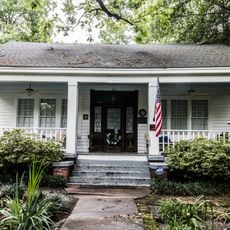
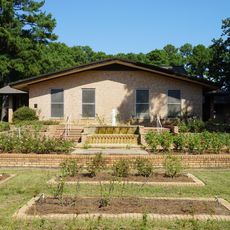
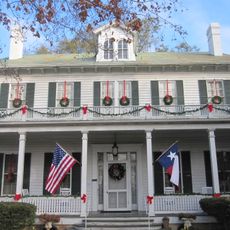
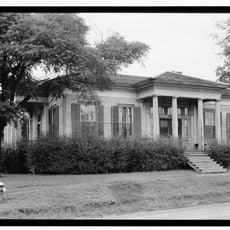
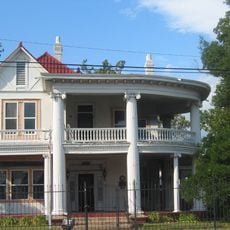
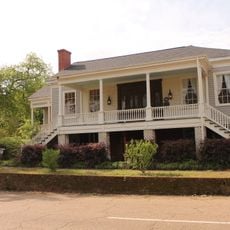
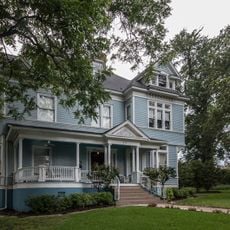
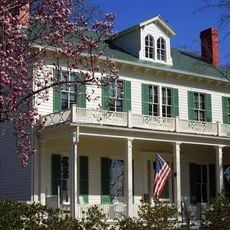
Mimosa Hall, plantation house in Leigh vicinity, Harrison County, Texas, United States
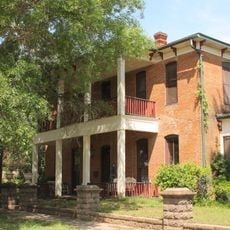
Mimosa Hall is a two-story brick building featuring Greek Revival design with classical columns and balanced proportions. The estate was built in 1844 as one of the first brick residences in Harrison County, with a formal portico of two columns marking the front entrance and handmade bricks throughout its construction.
John J. Webster, born in Alabama in 1796, moved to Texas in 1839 with his wife Miriam and their children, and built Mimosa Hall in 1844. It was the first brick house in Harrison County, standing in the middle of 7,000 acres; enslaved people made all the bricks and cut all the lumber. The plantation stayed in the original family until the 1980s, when Douglas Blocker sold it; it later served as a bed and breakfast before becoming a private residence again.
The house takes its name from the mimosa trees on the grounds. Enslaved people made the bricks and cut the lumber for the 1844 house, and a quilt they made around 1860, called "The Chalice," is held by the American Museum in Britain. Descendants of the original family still maintain the cemetery two miles back in the woods.
The house is privately owned and not regularly open to visitors, so you should check in advance before planning a visit. Located in Leigh in Harrison County, it is best reached by car since the property sits on rural land away from town centers.
The quilt called "The Chalice", made around 1860 by people enslaved at Mimosa Hall, is in the permanent collection of the American Museum in Britain. It is one of the few surviving objects made by the plantation's enslaved community, and its name refers to a chalice motif.
The community of curious travelers
AroundUs brings together thousands of curated places, local tips, and hidden gems, enriched daily by 94,476 contributors worldwide.