Caddo Lake, Ramsar wetland in Texas and Louisiana, United States
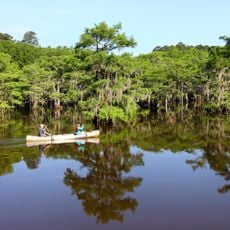
Caddo Lake is a wetland covering roughly 25,400 acres along the Texas and Louisiana border, where cypress forests and a network of waterways meet. The wooded shoreline and shallow bayous form a maze of natural channels, with trees growing directly out of the water and roots often submerged.
The water body formed when a natural buildup of timber and sediment blocked the Red River for centuries, raising water levels upstream. Oil drilling began in the early 1900s and altered parts of the shoreline through industrial activity.
The lake takes its name from the Caddo people, who lived on its shores until the United States expelled them in the 19th century and forced most to move to Indian Territory. The mayhaw shrub (Crataegus opaca) grows here, and people gather its fruit to make jelly. Since 1965 the lake has been the focus of hundreds of reported Bigfoot sightings, according to the North American Wood Ape Conservancy.
Boats and canoes are the best way to explore the winding waterways, though shallow sections can become harder to navigate when water levels drop. Visitors who prefer hiking or fishing will find access points and basic facilities on both sides of the state line.
An oil derrick from 1911 once stood over the water here and is recognized as the first offshore platform of its kind worldwide. Remnants of early petroleum infrastructure remain visible along parts of the shoreline today.
The community of curious travelers
AroundUs brings together thousands of curated places, local tips, and hidden gems, enriched daily by 92,900 contributors worldwide.