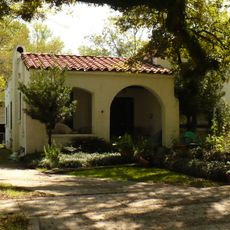
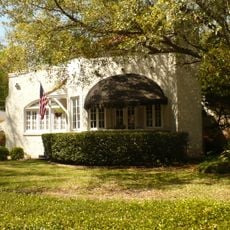
Greene-Marston House, Victorian house in Mobile, Alabama
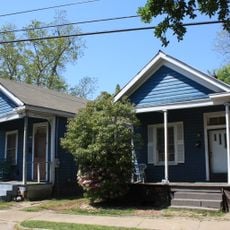
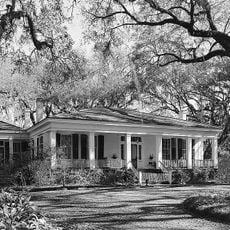
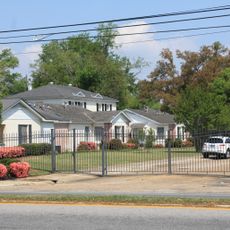
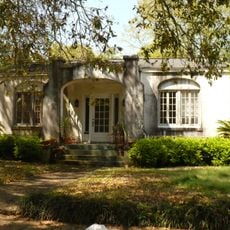
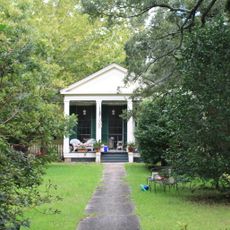
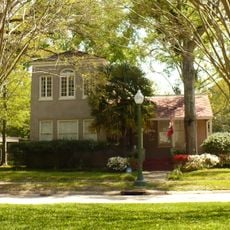
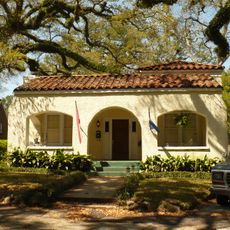
The Greene–Marston House is a two-and-a-half-story Late Victorian dwelling in Mobile, Alabama, built by Martin Van Heuval in 1903 around a one-and-a-half-story cottage of about 1851, which survives as a side wing. William Syson remodeled it in 1910.
Construction began around 1851 as a one-and-a-half-story cottage built by the Greene family. In 1903 Martin Van Heuval added a two-and-a-half-story Late Victorian structure, folding the earlier cottage into the main block as a wing. William Syson remodeled the house again in 1910. It was listed on the National Register of Historic Places on January 11, 1983, for its architectural significance.
The house served as a gathering place for writers and intellectuals who met to exchange ideas and support artistic work. This literary tradition shaped how people experienced and remembered the property over the decades.
The property sits on substantial grounds with plenty of space surrounding the main building and its connected sections. Plan to spend time exploring the various parts and wings of the structure and the land around it.
The house earned the nickname 'Termite Hall' after an insect infestation was discovered, a mishap that later inspired a celebrated cookbook by a local author. This quirky story has become part of the place's local lore.
The community of curious travelers
AroundUs brings together thousands of curated places, local tips, and hidden gems, enriched daily by 93,783 contributors worldwide.