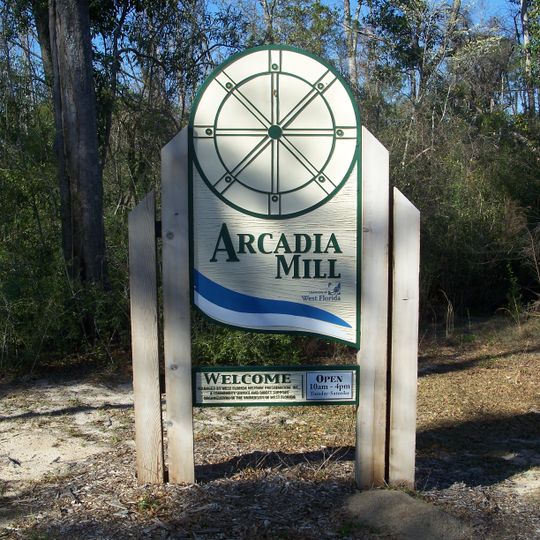
Arcadia Sawmill and Arcadia Cotton Mill, Industrial mill complex in Santa Rosa County, United States
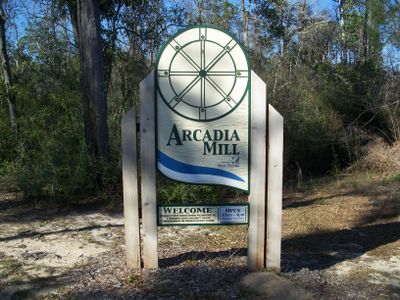
Arcadia Sawmill and Cotton Mill is an industrial complex with remains of a water-powered facility from the 1800s. An elevated boardwalk guides visitors through the archaeological site, where old building foundations and equipment traces are visible.
Juan de la Rua, Spanish mayor of Pensacola, originally owned the land and built a small dam there. Joseph Forsyth bought the tract in 1828, added a sawmill and enlarged the dam, then partnered with Andrew and Ezekiel Simpson; Timothy Twitchell later added shingle, silk and bucket production. The mills moved to Bagdad in 1840 and a cotton mill run by slave labor replaced them, becoming Florida's largest by the early 1850s. Forsyth died on March 10, 1855, fire destroyed the cotton mill that year, and Confederate troops blew up the abandoned complex during the Civil War.
The name Arcadia comes from the Spanish land grant of Juan de la Rua, mayor of Pensacola, who built the first small dam here before Joseph Forsyth bought the land in 1828. By the early 1850s the cotton mill, run by the Forsyth and Simpson Firm with enslaved labor, was the largest in Florida, and the community around it held shops, a quarry, a tannery, a blacksmith and a well.
The site is easily accessible via an elevated walkway and features informational displays. A nearby visitor center and museum present exhibits about the area's industrial past.
The complex used a mule-powered railroad and a log flume to move lumber to the nearby Blackwater River. This early transport network shows how workers creatively solved logistics challenges in remote areas.
The community of curious travelers
AroundUs brings together thousands of curated places, local tips, and hidden gems, enriched daily by 94,360 contributors worldwide.