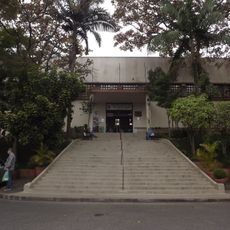
Casa do Sítio da Ressaca, Portuguese colonial house in Jabaquara District, Brazil
Casa do Sítio da Ressaca is a colonial-era residence in the Jabaquara District featuring thick rammed earth walls, black cinnamon wood doors and frames, and original 18th-century roof tiles marked with potter signatures. The structure occupies a former farmstead and preserves period architecture through details such as hand-fired roof tiles.
The house was built in 1719, as the number engraved on the main door jamb suggests; its roof tiles bear the years 1713, 1714 and 1716. The name Ressaca first appears in 1780, when owner Teresa Paula de Jesus Fernandes requested the measurement of the sítio, then reaching the lands of Padre Domingos Gomes de Albernáz. In 1972 it was listed by CONDEPHAAT after Luís Saia intervened against subway expropriations.
Since 1990 the house has formed part of the Jabaquara Cultural Center, and since 2002 it has held the Acervo da Memória e do Viver Afro-Brasileiro, a collection of objects on the presence of Black people in São Paulo. The same building houses the Biblioteca Municipal Paulo Duarte and hosts exhibitions and events.
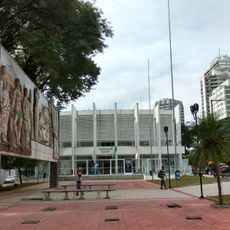
The house is at Rua Nadra Raffoul Mokodsi, 3, in Jabaquara, near the Jabaquara metro station. It forms part of the Jabaquara Cultural Center and also houses the Paulo Duarte Municipal Library. The 1986 fire and later restorations mean some areas show repaired wood and tilework.
The structure deviates from typical bandeirista architecture through its asymmetrical layout, single off-center porch, and dual-pitched roof design. These unusual features set it apart from other houses of the same period found throughout the region.
The community of curious travelers
AroundUs brings together thousands of curated places, local tips, and hidden gems, enriched daily by 95,435 contributors worldwide.