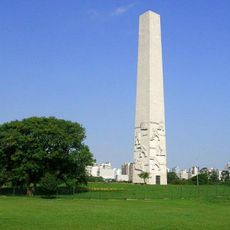
Instituto Biológico, Research institute and museum in Moema District, São Paulo, Brazil
Instituto Biológico is a research centre of the São Paulo State Secretariat of Agriculture, set on a 239,000 m² site near Ibirapuera Park. Its headquarters building, begun in 1928 on land donated as "Campo do Barreto", took 17 years to complete and was inaugurated on 25 January 1945. The campus holds laboratories for animal health, plant health and environmental protection, a museum, a memory centre and a library of over 100,000 volumes.
Established in 1924, the facility gained early recognition for solving a coffee pest crisis using biological control methods rather than chemicals. This agricultural mission shaped the institution's focus on research that directly benefits farming communities.
The institute's name comes from its 1937 renaming, a decade after its founding as the Biological Institute of Agricultural and Veterinary Defence. Its museum and memory centre hold historical scientific collections, including helminthology, bacteriology, mycology, herbarium and entomology specimens. A coffee plantation on the grounds recalls the coffee borer campaign that led to its creation.
The institute occupies a 239,000-square-metre site near Ibirapuera Park, donated in 1928 as "Campo do Barreto". The main building, inaugurated on 25 January 1945, houses the Museum, the Memory Centre and a library of over 100,000 volumes. Visits focus on these indoor collections rather than the laboratories.
A small coffee plantation grows on the grounds, serving as a living reminder of the agricultural heritage that inspired the institute's founding. This surprising garden within an urban research setting shows the connection between the city and its agricultural past.
The community of curious travelers
AroundUs brings together thousands of curated places, local tips, and hidden gems, enriched daily by 93,863 contributors worldwide.